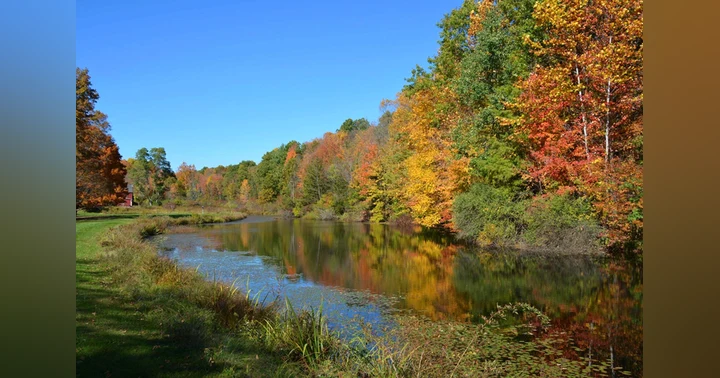
139. Fall Foliage Guide: Hudson Valley Edition

 Apple Podcasts
 Spotify
 PocketCasts
 Goodpods
 YouTube
 Castbox
 Castro
 iHeartRadio
 Amazon Music
 Podcast Addict
 Audacy
 Pandora
 RSS Feed
 PlayerFM
 It's peak leaf-peeping season, and Cidiot® and Kaatscast have teamed up to release foliage episodes the same week. Kaatscast covers the west side of the Hudson; Cidiot's got the east.
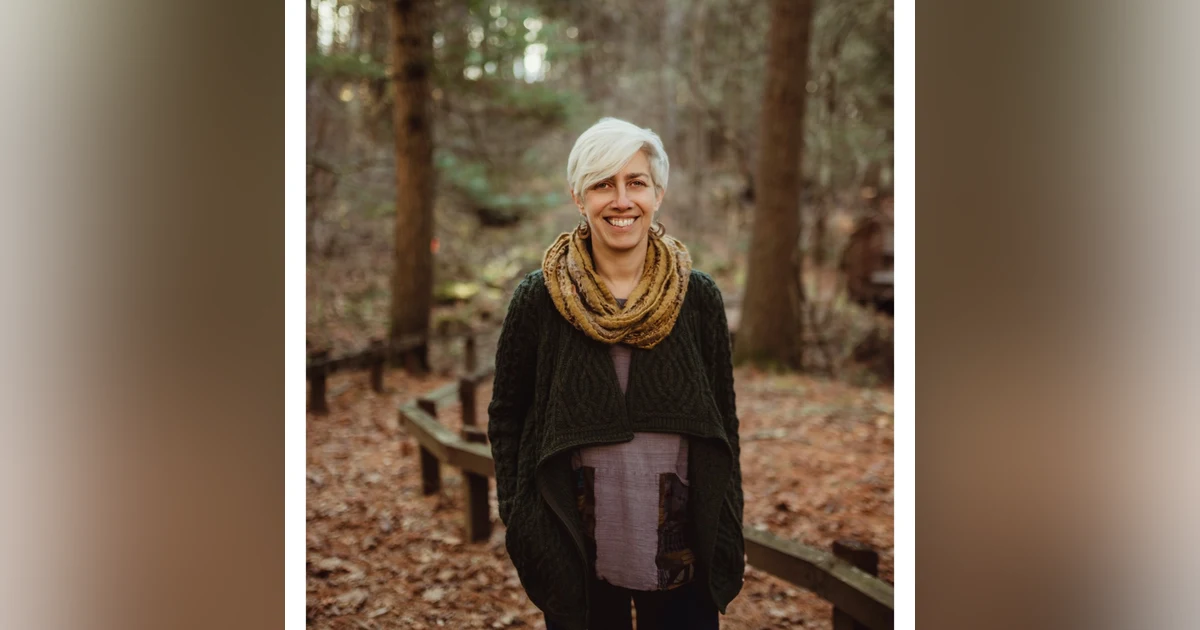
In this episode, Mat Zucker sits down with Amy Zanne, senior scientist at the Cary Institute of Ecosystem Studies in Millbrook, to answer the question every leaf peeper has: why do leaves do this?
Amy — a botanist by training and a recent Hudson Valley transplant by way of New Hampshire — breaks down plant science behind fall color: the pigments that make leaves orange, yellow, red, and purple, why trees drop their leaves at all, how they scramble to reclaim nutrients before winter, and what causes a leaf to let go and fall to the ground.
Mat and Amy also get into what separates a spectacular foliage year from a dud and tips for getting the most out of your own leaf-peeping trips — including how to press and preserve your favorite leaves so the color lasts well past the season.
Related links to the episode:
- Fall Foliage Guide: Catskills Edition (Kaatscast podcast)
- I Love NY Fall Foliage Report
- Blog: Places to Take Fall Foliage In the HV (Cidiot.com)
- Fall Foliage Prediction Map
- Paper: Plants in the Afterlife (Cary Institute)
Timecodes
- 00:00 – Carotenoids vs. anthocyanins, two main leaf pigments
- 01:41 – Intro: The origins of "leaf peeper"
- 03:07 – Where to check foliage timing
- 04:14 – Meet Amy Zanne: her path and what she researches
- 07:43 – Why leaves change at all
- 09:50 – How timing varies by species (vessel size, geography, elevation)
- 12:30 – The tree "economy": pulling back nutrients before shedding leaves
- 13:33 – Is climate change shifting foliage timing?
- 15:04 – The three color classes explained: carotenoids, anthocyanins, tannins
- 19:00 – Why anthocyanins act like sunscreen for a shutting-down leaf
- 21:41 – The abscission zone: how a leaf physically detaches and falls
- 24:11 – What happens to leaves after they fall
- 26:30 – What makes a great foliage year vs. a mediocre one
- 28:20 – Amy's advice for getting the most out of leaf season
- 31:12 – Foliage-tracking tools and how to plan a peeping trip
- 34:22 – How to preserve leaves: pressing them in a book, then sealing with wax paper and an iron
Thanks to Brett Barry of Silver Hollow Audio and the Kaatscast podcast for editing the show and partnering on this seasonal effort.
©2026 MCZ Media LLC. Cidiot® is a registered trademark.
139 Fall Foliage Full Episode v2 Transcript
Amy Zanne: [00:00:00] There are a couple different classes of, or types of colors. So you have the carotenoids, these are your oranges and yellows. And then you [00:00:10] have your anthocyanins. These are your reds and purples. And so you think of, you know, things like aspens and birches and maples will have the, these carotenoids, and [00:00:20] then you'll have dogwoods or maples or oaks have these reds and purple colors.
And so different species have these different colors, and sometimes they have both of them. So all of these are [00:00:30] pigments, and they're s- they're really important for the plants. The, so the carotenoids are always there. They're always in the leaf. They're a really critical part of the [00:00:40] photosynthetic machinery, and they help for the plant to, to help harvest the power of light.
You don't see them because the green color from the chlorophyll masks them.
Mat Zucker: [00:00:50] Oh, they're always there.
Amy Zanne: So they're there, but you don't see them, so you need to get rid of the chlorophyll to, to be able to see these oranges and yellows. Anthocyanins on the other side, these reds and [00:01:00] purples, are produced as you go into the senescent period, so they're made de novo.
Both of these types of compounds are doing a really important job for the plant. [00:01:10]
Music: Down in the valley moved up from the city It's a new way of living and I'm trying to get used to it One part booze half an ounce of an idiot Ordered a Manhattan and they called me [00:01:20] a cidiot At first it hurt my feelings but it's kinda got a ring to it
The country they can tell when you're new to where [00:01:30] I'm looking at a place but I'm trying to keep fitting in. It takes too long to be alone so for now I'm a cidiot [00:01:40]
Mat Zucker: I'm Mat Zucker, and this is Cidiot, learning to live and love life in the Hudson Valley. You've heard me say it before, this place is beautiful year-round, [00:01:50] but peak Hudson Valley is really the fall.
It's pumpkin picking, it's sheep and wool, it's hiking with way fewer bugs, and it's fall foliage. [00:02:00] People come from all over the country just to watch our leaves change color. We even have a name for them, leaf peepers. The phrase actually started in New England, leaf [00:02:10] peeker, and it wasn't a compliment.
Full-time residents coined it to describe out-of-town tourists clogging narrow country roads, driving slowly, stopping [00:02:20] abruptly to snap photos. Sound familiar? Kinda cidiot if you ask me. These days, though, it's a badge of honor, though my husband Brian still cringes every time I [00:02:30] say leaf peeper. I get it. It does sound a little pervy.
But after witnessing this change for more than a decade, I still think it's a sight to behold, and it makes you feel lucky [00:02:40] just to be a part of the landscape. Since fall foliage is such a big deal, my friend Brett Barry of the Cats Cast Podcast and I decided to make it a bit of a media [00:02:50] event We're both releasing our foliage episodes the same week.
Catscast, the Catskills podcast, will cover the west [00:03:00] side of the Hudson. Cidiot's got the east. Between the two of us, hopefully more people get out there and make the most of the season. So when should you go? Well, I love New [00:03:10] York's fall foliage report. It's the official state tool, with volunteer spotters reporting weekly on color change and peak timing all across the state.
Rule of thumb, the upper [00:03:20] Hudson Valley peaks early to mid-October. The lower valley, mid to late October. So Columbia County usually turns a week or two before Putnam. There's also the independent fall foliage [00:03:30] prediction map at explorefall.com. I'll link to both of these in the show notes, plus my own roundup of reader-recommended spots over at cidiot.com and on the [00:03:40] blog.
But Cidiot's really about curiosity, so I brought my leaf questions, and some of yours, to the famous Cary Institute in Millbrook in Dutchess [00:03:50] County. I sat down with senior scientist Amy Zanne, who patiently walked me through why leaves do what they do, why some years the reds go absolutely fiery, why colors [00:04:00] show up in a different order than you'd think, and why the whole thing is really a plant just getting ready to survive winter like the rest of us.
So peepers, join me [00:04:10] for a conversation with Amy. Hi, Amy
Amy Zanne: Hi, Mat
Mat Zucker: Uh, thanks for coming on Cidiot.
Amy Zanne: It's really a pleasure to be here. Thanks for inviting me.
Mat Zucker: [00:04:20] Yeah. So we're gonna talk about something that, um, I've never done an episode on. It's come up now and then. A lot of people come up, you know, this time of year to [00:04:30] experience fall foliage, you know, and peak and stuff.
And I thought I'd have a conversation about, like, why does this happen, and what does it mean? So, you know, so talking to someone with a more [00:04:40] science background than a tourist background or, you know, the investigative journalist I am, I'm going to the source. Maybe we could start with, first of all, your relationship to the Hudson Valley.
Like, how did you get here? [00:04:50] Are you from here? And, and then we can get into, you know, what you do in the Cary Institute and then most importantly, into leaves.
Amy Zanne: That sounds fabulous. I'm a New [00:05:00] Hampshire native, and so I grew up with fall foliage in my back, you know, the, my backyard. And, uh, would periodically fight the, the leaf peepers coming up along the [00:05:10] Kancamagus to see all the, the foliage changes there.
And- ... uh, my favorites are the mixture of colors, especially when you get the blaze of red. And so driving up [00:05:20] the, uh, the Connecticut River Valley, uh, on the Vermont/New Hampshire border or driving along the Kancamagus or just in my backyard seeing those, those brilliant maples [00:05:30] and reds and contrasts of different colors are one of my favorite things.
I am relatively new to the Hudson Valley. I've been here for about two years, and so it's a fun place [00:05:40] to learn and explore because it's, uh, there's a lot of similarities. A lot of the trees that we're talk, gonna, going to talk about today are the same as in New Hampshire, but then a lot [00:05:50] of the landscape and the geology and the rock formations are really different.
And, and so it's been fun to learn about the, uh, Hudson Valley as I've, I've spent time here.
Mat Zucker: So what made you [00:06:00] choose to come here?
Amy Zanne: I moved here for the Cary Institute of Ecosystem Studies, which is- Oh ... where, where I work. And-
Mat Zucker: Came for a job.
Amy Zanne: Yeah, I came for my job. And, uh, I, [00:06:10] I was 16 years in academics. I did my undergrad at, in New Hampshire, but then moved away.
So I've lived in St. Louis, and I've lived in Berkeley, uh, and I've lived [00:06:20] in Miami, and I've lived in Sydney, and I've lived in, uh, Durham, North Carolina. So I've lived all over the place, traveling around, and that built up to an academic where, um, most [00:06:30] recently I was at University of Miami, 16 years as a professor, uh, teaching things like botany and climate change and, and general ecology and things like [00:06:40] that as, as I went along.
Uh, and one of the things that Cary offers is basically it's a job that's 99% research, and I really love [00:06:50] research. Uh, it's fun to teach, and I, I still look for opportunities to mentor and to train, but it let me really focus on my research, and that's my real passion, and that's what I-
Mat Zucker: What, what are you researching?
Amy Zanne: [00:07:00] I have a few different threads. I was trained as a botanist, and I did a lot of work thinking about how wood is constructed and the leaves to a degree to, uh, [00:07:10] is, is built to move water, how it's plumbed, and lets trees move water in wet versus dry places. So I did a lot with how trees function in life. Uh, but I [00:07:20] realize I'm not very good as a plant physiologist trying to push water around.
There's lots of messes in the labs and things. But I took that interest in [00:07:30] construction for life into the afterlife to think about how wood stores and releases carbon one- once plant dies, and how is it, their construction, their anatomy, their chemistry [00:07:40] affecting how they store and release carbon in the afterlife.
Mat Zucker: I guess my first leaf question would be, I mean, maybe talk to me like I'm grade school. Like, why does this happen? Like, why do [00:07:50] leaves change? I mean, the, the trees aren't dying. Are the leaves dying? Like, why, why does this happen?
Amy Zanne: When do we see leaves falling, right? Around here, we see [00:08:00] l- leaves falling as we're- Yeah
going through winter. And so, you know, we have the luxury of having houses with heaters and cars with heaters and winter [00:08:10] coats and things like that to stay warm when freezing conditions. For organisms that can't hide, you know, rabbits and deers and things like that can do that, too. [00:08:20] Trees can't produce...
Well, by and large, plants can't produce their own heat. We- there's some fun examples of where they do, but they're not generating heat. They're, they're not endotherms like we [00:08:30] are. And, uh, and freezing is a really bad condition. If anybody... Probably there are people that are listening to this pod- podcast who've had their pipes freeze in winter.
So [00:08:40] plants also can have their pipes- Yep ... freeze. And so if you- Yep ... get frozen pipes, then you can l- that can lead to not being able to move water, which is critical through the plant when [00:08:50] during the growing season, and so you'd lose part of the plant or the whole plant can die. So th- what they're doing is they're getting ready for winter, just like we turn our hoses off, you know, outside and pull them [00:09:00] in and things like that so that they don't have problems with, with their tissues, wi- with the pipes.
And then the other thing is living tissues can freeze. Um, we'll see, you know, [00:09:10] frozen, frozen animals or something like that, you know, uh, that couldn't find a place to hide. And so they can't escape from those freezing conditions that cause cell death And so [00:09:20] what they wanna do is to get rid of the tissues that are hard to maintain through winter, winter conditions.
And some plants can do that. You think of things like holly [00:09:30] trees that are evergreen or pine needles, you know, that are, are carried through winter. And so those plants have to come up with other strategies to keep those tissues functioning, both w- the, in terms [00:09:40] of water, their transport pathways, and the living cells.
And so the different- So
Mat Zucker: they're shedding- Yeah ... they're shedding the leaves-
Amy Zanne: Mm-hmm ...
Mat Zucker: so they t- preserve their circulation? [00:09:50]
Amy Zanne: To make sure that their vascular pathways in their body- Yeah, yeah ... are functional for next year.
Mat Zucker: How does the timing work? Because we'll get into color in a second, which is- Yeah ... I think where the audience wants to [00:10:00] go, but I can feel it.
How does time and geography work if I'm a- Right ... if I'm a leaf or peeper?
Amy Zanne: Yeah. So, uh, it can r- it can [00:10:10] matter a lot for timing across different species. One of the things we know is that the size of their vascular ... you know, bigger pipes, uh, versus smaller pipes, bigger pipes [00:10:20] are more at risk of freezing-induced embolisms, these air bubbles we talked about.
Mat Zucker: Oh.
Amy Zanne: And so, yeah, which is really interesting. So you think about who leafs out later [00:10:30] in the spring and who drops their leaves earlier or starts,
Mat Zucker: you know- Wait, wait, is that a word, le- leafs out?
Amy Zanne: Yeah. We say w- we'll see they're leafing out. Yeah. Oh.
Mat Zucker: It's great. Love it. I, I love weird [00:10:40] words. Like I, I, um, yeah, great.
Amy Zanne: Well, it's, it's just leaf out. I mean, it's not, uh,
Mat Zucker: not- No, it, it's super fun though. Yeah.
Amy Zanne: And, and so there's some really nice work from the '80s sh- [00:10:50] talking about who's doing this. And so it's the things that have the bigger pipes that tend to leaf out earlier and, and senesce, you know, their leaves, uh, th- their leaves die back [00:11:00] earlier, whereas other things can chunk along if they have smaller pipes.
And so things like oaks, and hickories, and elms, and things with big vessels, these are the ones that are more [00:11:10] careful, uh, whereas birches are really able to keep their pipes going for a long time. And so you- Hmm ... can get different timings based upon your internal [00:11:20] vasculature.
Mat Zucker: Hmm.
Amy Zanne: Uh, or their pipes. When I say vascular, vasculature, you can think of our vasculature are veins, their vasculature are their vessels, uh, the pipes to move [00:11:30] things around.
And so, uh, that can matter a lot. And, you know, what matters is freezing and colder temperatures and what happens under those [00:11:40] conditions. And so geography matters because we know that it gets colder earlier in the year at higher latitudes or higher elevations. So you s- you go to the poles or you go to [00:11:50] high mountain tops, that's when you're gonna get earlier freezings.
You think about our hard frosts that we get worried about, you can have smaller freezing events that don't do enough. There's various insulation that plants have, [00:12:00] or they can possibly survive small frost, but then those hard frosts when, when those develop. So that's what they're trying to get ready for, and so they need to protect the tissues that they [00:12:10] want to live to next year.
You can do that by, you know, avoiding winter altogether and being an annual or dying back. You can stay, uh, persistent in [00:12:20] the landscape and live through multiple years, but then drop your leaves, or you can be evergreen and you have to... Each of those has a different evolutionary trajectory for how you do that to [00:12:30] persist in harsh conditions.
If you think about, we have to keep our economies, our banks, you have money coming in, you have money going out, right? And it's hard to earn that money. So if you have this set of money, [00:12:40] you have to decide how best to use it, how to allocate it, and trees have to do that same thing. Their economies, well, we often talk about carbon-based, but they need to be careful.
It's hard [00:12:50] to acquire certain nutrients and things like that. And so what they do is they're wanting to get rid of their tissues, but they also want to try to pull back as much of the [00:13:00] nutrients as they can because it's hard and expensive to get that. So there's this careful dance of shedding the tissues that they don't want, but pulling back as much as they can so they can put [00:13:10] it back in the bank, store it in their roots and stems so that they can grow new leaves next year.
And they don't have to start from scratch and try to take up totally new nutrients. They can recycle [00:13:20] that. So there's a period of resorption where they're, they're pulling back the nutrients, and then they're shedding those leaves, and that's what we're watching as they're, they're preparing [00:13:30] for winter.
They're tamping down for winter, just like you prep your house for winter.
Mat Zucker: So from a farmer's point of view, they talk about a lot of changes. You know, certain berries and fruits are happening [00:13:40] earlier because of climate change and things. Is that happening in leaf world too, or is it still very similar?
And when people say, "Oh, it's early this year, it's early this year," it's not really early this year, [00:13:50] it's basically the same thing. Or, or has it been substantially changed? I mean, I know the Hudson Valley's pretty varied, but still.
Amy Zanne: If your cue is temperature, temperatures are getting warmer here. [00:14:00] If light is your cue, then you won't necessarily advance, but if temperature or moisture is your cue and those are changing, then you do.
So it depends on what [00:14:10] you use to figure out what to do. And you know, and I know that there's a big component of light as a cue. So it depends a, a little bit on those balances- Right ... of what that, your tree species is [00:14:20] using to say, "Winter's coming, and how much time do I have?" And, and, uh, and so I think, you know, certainly we're getting longer growing seasons, and things can keep their leaves [00:14:30] longer.
Things like ash trees or ginkgo trees, uh, when you walk around, you see they've turned colors, they turned yellow, uh, but they have their leaves, and then you have one hard [00:14:40] freeze event in a night, and all the leaves fall. What causes them to drop their leaves is freezing, and then it's all done. And so that's, that's gonna be set by that length of that, [00:14:50] when temperature is changing.
Yeah. And if you get longer. So, you know, it depends on this combination of cues that they're using.[00:15:00]
Mat Zucker: Okay, so let's, let's talk about color. What do you think cidiots should know about [00:15:10] color? Like, when we're, we're, we're driving along and we hopefully don't park in the middle of the road to gape, but we start to see these colors. What do you think we should know about the different colors that are there, [00:15:20] and maybe why they are the way they are?
Amy Zanne: Yeah. So those colors are super important for the plants, and while they're doing this job of [00:15:30] trying to pull resources and then g- get rid of these leaves, and what they're doi- trying to do is a race against freezing, right? And so they need the right weather conditions. There are a couple different classes of, or [00:15:40] types of colors.
And so you have the carotenoids. These are your oranges and yellows. And then you have your anthocyanins. These are your reds and [00:15:50] purples. And so you think of, you know, things like aspens and birches and maples will have the, these carotenoids, and then you'll have things, you know, like, um, [00:16:00] dogwoods or maples or oaks have these reds and purple colors.
And so different species have these different colors, and sometimes they have both of them, like the maples can have, you know, they can have [00:16:10] reds and, and yellows and oranges in some cases. So all of these are pigments, and they're s- they're really important for the plants, and we can talk about [00:16:20] that next, but I'll, let me just say this first.
The, so the carotenoids are always there. They're always in the leaf. They're a really critical part of the photosynthetic machinery. Oh. [00:16:30] They're called accessory pigments because they react with light and they help to take, you know, the, for the plant to, to help to harvest the power of light. You don't see them because [00:16:40] the green color from the chlorophyll masks them.
Mat Zucker: Oh, they're always there.
Amy Zanne: So they're there, but you don't see them. So you need to get rid of the chlorophyll t- to be able to see these oranges and, and, and [00:16:50] yellows. Anthocyanins, on the other side, these reds and purples, are produced as you go into the senescent period, so they're made de novo [00:17:00] So those, they're really two really important classes.
They're the-
Mat Zucker: Well, I don't think anybody would know that. Like, just look, there's, like, really two kinds of leaves.
Amy Zanne: Well, there's those two, and I'll say one other in a second.
Mat Zucker: Okay.
Amy Zanne: But [00:17:10] so both of these types of compounds are doing a really important job for the plant, and we'll talk about those. But I'll just mention the third thing you see are things like the br- the browns and the coppers.
[00:17:20] So you think of copper beech and how pretty they look with their fall foliage. Those are from tannins. And so the tannins get revealed as [00:17:30] the leaf does that pulling back, that resorbing. So those, the tannins are always there, too, and tannins are really good. If you think about, like, tannins can be really bitter.
If anybody's done anything like [00:17:40] chew on an oak leaf, I don't know that they would or whatever, and you get these really bitter... Or acorns. Uh, the tannins bind up proteins, so they're, they're really good at making it really hard for, [00:17:50] say, caterpillars trying to feed on them to digest because they won't be efficiently getting the proteins from their diet.
And s- and there's some antimicrobial properties and things like that. So those are always there, too, uh, [00:18:00] but we don't see them in the same way until they, you pull back again the chlorophyll. So there's the tannins that are doing one thing, but then these other two, these, these, uh, reds and oranges and [00:18:10] yellows and purples and things, what these are both doing is these are pigments that where light reacts with them.
And so you can imagine, if we think about [00:18:20] chlorophyll, chlorophyll's job is to help the plant harvest light. The fun thing about chlorophyll is it's absorbing in the light spectrum In [00:18:30] wavelengths that are not green. It can't absorb in the green color, so the green is reflected. So why we see green plants is because the plants can't use that green.
It's reflecting it back. [00:18:40] So it's kind of fun, uh, you know, why we see green. And so when chlorophyll's there, that's really critical for the photosynthetic process. And then you have these carotenoids, these accessory [00:18:50] pigments that are helping harvest light in different colors because reds and orange, or oranges and yellows of the carotenoids, uh, absorb at different wavelengths to [00:19:00] chlorophyll.
So they kinda help, uh, in, in other situations. Anthocyanins, again, they're reds, purples. They're absorbing in different wavelengths. Well, if what you wanna do is try to pull the nutrients back, [00:19:10] well, things like chlorophyll have a bunch of nitrogen in them, and so you wanna break down that chlorophyll so that you can keep it for next year.
[00:19:20] Mm-hmm. But if you're getting rid of the chlorophyll and you still have light coming in, that can be really problematic for the plants, that there's energy coming into the leaf, it's heating up, and [00:19:30] it's gonna zap the leaf. It's gonna cause damage to the leaf- Hmm ... if you don't have a way to handle that incoming light.
So what the plants have done is they've said, "Okay, well, we're gonna use these other [00:19:40] pigments. Either we have them in place, the anth- or the carotenoids, or we make them de novo, the anthocyanins, so that the plant doesn't have trouble while it's trying to wind down its leaf, keep its leaf [00:19:50] functioning so it can pull as much nutrients out before it's time for the leaf to drop, before it pulls up."
So
Mat Zucker: these colors are acting as like a in-between stage or... Trying to think of what it w- [00:20:00] what, what would the- It's sort
Amy Zanne: of like sunscreen, right? Ah. And not exactly. Sunscreen, you know, s- uh, that, that-
Mat Zucker: No, but it's, it's a,
Amy Zanne: it's a protective layer ... that's [00:20:10] doing
Mat Zucker: is. Yeah, it's, it has a photoprotective... They're acting as photo- And to mitigate or moderate.
Amy Zanne: While the chlorophyll is no longer functioning or not functioning as well.
Mat Zucker: Love it.
Amy Zanne: Yep. So those colors are very functional. In my reading, you [00:20:20] know, this is not my exact area of field, but in, like, reading the different papers as I was getting ready for this, I was trying to understand the dynamics of how it works.
It was fun, uh, [00:20:30] seeing... People have done experiments where they've looked at the relative capacity of the anthocyanins, the, the reds and purples, versus the carotenoids, the oranges and yellows, [00:20:40] to handle that incoming light. And so the anthocyanins are supposed to be more effective at pulling light. So depending on the conditions where you're living, [00:20:50] how much sunlight comes in, you might, you might see more species that have a red-purple color.
And I didn't follow this thread, uh, but there was some suggestion in, like, oaks and things like [00:21:00] that, why there, there are these tall, you know, canopies above versus a lot of times you'll have, say, birches and aspen that are growing in the understory. And so maybe it's okay to have a [00:21:10] less efficient Way to handle the extra light.
I, I didn't follow the thread to really see if, if that's shown. And we know at high latitudes you get a lot of birch and [00:21:20] aspen, and there's a lot of light coming in, and they can be the main tree, or they're under... Sometimes they're under, in the boreal zone, they're under conifer canopy. So they, you know, they get less diffused light, and it's not [00:21:30] so much direct light.
So there are, there are an evolutionary strategy for the plants to protect their leaves while they're going through this phase of trying to get as much of the nutrients [00:21:40] pulled out as possible.
Mat Zucker: So what else happens? And then I wanna get into your advice.
Amy Zanne: So we've talked about how you have the colors that are present always, or the anthocyanins that get made, [00:21:50] right?
So the, the plant is trying to shut things down. It's trying to draw out all of the nutrients, but it also has to physically break the connection between the [00:22:00] leaf and the, the, uh, the stem, right? So there's-
Mat Zucker: Forgot about that.
Amy Zanne: Yeah. So there's something called an abscission zone where you, you form this thing, a sort of like callusing [00:22:10] tissue.
And so the plant takes some time to develop that And so the anthocyanins are super cool because they develop best when there's some bright sunlight around. [00:22:20] And what's happening is there's some degree of photosynthesis still happening as it's not just a, it's not like just turning off the hose, right?
It's, it's a gradual process. And so if you have some bright [00:22:30] light, you're still gonna have some sugars made. Well, what happens is if you're starting to shut down that leaf, you have that abscission zone, those sugars get stuck in the leaf. [00:22:40] They start doing some signaling that tells the plant to make particular hormones and produce particular compounds.
These compounds then get combined and stabilized [00:22:50] with the sugars that are in there, and those get moved into the vacuole. The, um, anthocyanins are water-soluble, so they'll leave really quickly unless you stick them someplace. The place that plants [00:23:00] stick things for anthocyanins is in their, what they're called their vacuole.
So this, this, the space that, that doesn't let them just move easily out of the, out of the [00:23:10] cell. And so there's this really interesting process of those sugars being produced when it's really sunny that then signal to, um, to start stuffing, combining the [00:23:20] sugars with these other compounds to make the anthocyanins that then can help protect the plant.
Those sugars are stuck there because of that abscission zone. So it's this really intimate dance that the leaf is [00:23:30] having for trying to draw things out, but also trying to cut things off- Yeah, yeah ... for that abscission zone. The nutrients are still going out to a degree, but those sugars are getting stuck [00:23:40] in.
And so I don't know if there's something about the size of the compounds that lets the nutrients continue to flow, but not the sugars or, you know. But it's not a yes/no. It, I think early work suggested that there was this, like, [00:23:50] abscission happen and then this happened, and really that there's a slow shutdown with some, some of the pipes working or s- you know, some flow happening and things like that.
Mat Zucker: And so the leaves start to [00:24:00] fall.
Amy Zanne: Abscission
Mat Zucker: happens.
Amy Zanne: That, that cuts off, and that's when the leaf falls off.
Mat Zucker: Right. And so there's a little bit of gravity hap- happening as well.
Amy Zanne: Mm-hmm.
Mat Zucker: And, and wind, and they go to the [00:24:10] ground.
Amy Zanne: Mm-hmm.
Mat Zucker: And then what happens with them afterwards?
Amy Zanne: Oh, that's when decomposition happens.
Mat Zucker: Ah, there you
Amy Zanne: go. That's the, the fun bit that's all, uh, very much in my [00:24:20] wheelhouse of thinking about the decomposition. And they're ... They don't get everything out of the leaves. There's still some important compounds, and there's a lot... You know, besides just chlorophyll, the most [00:24:30] nitrogen in the world is bound up in the protein called Rubisco.
Rubisco's part of the photosynthetic machinery. So you have the chlorophyll capturing the, the light, and then you [00:24:40] have this, the Calvin cycle, which generates the photosynthate, the, these complex sugars, and Rubisco is critical for that pathway. So of all the enzymes in the [00:24:50] entire world, the most nitrogen is tied up in Rubisco, in leaves.
And so we don't see Rubisco, but that also, you know, is being broken down and, uh, they're pulling those [00:25:00] compounds in, into the main plant so that they, they can use those nutrients for, for the future. They still have some nutrients as they fall, and they have a bunch of carbon, [00:25:10] and so as they fall, they're not being protected anymore 'cause they're not living.
They're... And so, uh, you start having microbes, bacteria and fungi, we know more about fungi, [00:25:20] um, but also various insects, uh, breaking them down. So for the biological things, you also have things like sunlight. Solar radiation can break down photoreactive [00:25:30] pigments. And so you have solar radiation, you have freeze-thaw events, all these things that are helping to decaf-
Fire, uh, can, can decompose these things. And so you [00:25:40] break the remaining leaf tissues down, and those nutrients and carbon and things like that get taken up. They might leach into the soil, or the microbes will respire. [00:25:50] As they're using their enzymes to break things down, they're just like us, releasing carbon dioxide, uh, as they respire, and so that goes back up t- into the atmosphere.
And so those, all of [00:26:00] those leaf compounds get broken down. And, uh, so by the time you have the snowpack coming and freeze-thaw events and all of these things, by the time we see spring, we see [00:26:10] just more of a pile of mush than those leaves that originally fell.
Mat Zucker: Yeah. Yeah. And I think the important thing is it's not over.
It's like you said, circle of life, and it's just because they've fallen, the, it's just [00:26:20] into another phase. What makes a good fall foliage season versus a meh one? Like, what... When things are brighter versus not so bright. Like, I, I, I don't really get it. [00:26:30] Is it just random, or is it all in the eye of the beholder?
Amy Zanne: Yeah. No, uh, the environment matters a lot. For plants to produce leaves and to have all that [00:26:40] energy, they need water. So you need to have, you know, spring and summer. You need to have enough water so that they have robust leaves for them to then have the colors produced. So [00:26:50] that really matters As you're moving into the fall foliage period, you need to have a bright sunlight.
You know, we talked about how that's really important for those [00:27:00] anthocyanins productions. So bright light, but then you'd start needing those cold, although not freezing temperatures at night, because that cold is what signals to the plant, "Okay, we're getting [00:27:10] close to freezing, so you better start making that abscission zone, that cutoff zone."
And so you- that you get the brightest colors, like those reds and purples are really brilliant if you have [00:27:20] warmish days with bright sunlight and coolish nights, but not freezing. Uh, so those, those conditions really matter. If there's been drought [00:27:30] or, you know, lots of wind or a massive cold snap where it got freezing, then it's not going to be a good year.
[00:27:40] Nutrients can also matter. You know, if they're, the plant's nu- nutrient stressed, it wasn't able to really make robust leaves. And so all of those can go into whether you have a really brilliant or [00:27:50] not so brilliant fall foliage season.
Mat Zucker: Yeah. Yeah. Nice. Nice. So that's why it happens. You know, with science there's always a reason.
Like, it's not [00:28:00] random.
Amy Zanne: Um, well, some things are random, but then the process- ... you know, we can understand the mechanism that, that leads... You know, mutations are random, right?
Mat Zucker: Yeah. Yeah, okay. [00:28:10] There, there- Like,
Amy Zanne: some things are, some things are random.
Mat Zucker: Okay, good, good, good, good.
Amy Zanne: But what our job, you know, the fun part of being a scientist is that we can be little detectives running around trying to [00:28:20] unravel why.
Mat Zucker: Yeah, yeah, I guess you're constantly finding a new, a new why to answer. Now, he- help us all get the most out of, out of the season that's coming up. For [00:28:30] me, I, I feel like I'm gonna take in what's happening differently. I'm gonna look at the colors differently, 'cause I'm gonna start to bucket them into those two or three different [00:28:40] buckets of whi- which ones are which, and have a little empathy, I think, for the trees about what they're going through, um, that they're in kind of a little bit of a self-preservation mode.
I'm gonna think about, about the [00:28:50] sunscreen. I know it's an imperfect metaphor, but it's funny. I'm gonna definitely use, I'm gonna start making jokes about leafing out. How do you want mere mortals to look at this experience and really make sure [00:29:00] they get the most out of it? I mean, some of them are schlepping up a couple hours and, and enjoying it.
Some are coming for the weekend. Some are coming back multiple times. Some live here, and we're gonna go out, like, every couple weeks [00:29:10] to see the differences. So what, when, how do you think we should look at it?
Amy Zanne: When I work with students or when I teach, you know, what my biggest goal is, to evoke curiosity and a sense of [00:29:20] wonder at how the world works.
Yeah. So we're going for the beauty of the majesty of the leaves. Yeah. And I think if we start then having some empathy, some understanding of the biology, then you can think [00:29:30] about applying that when you encounter leaf color change in other situations or things like that. Like, you know, another fun thing is, to go back to that leaf-out period is, [00:29:40] a lotta times you'll walk around and see those early spring leaves are red in color.
And so that's because they're producing those anthocyanins to protect the [00:29:50] leaf chemically before they're able to get expanded enough to, to physically defend them with a lot of carbon. So they, they stay pink because they [00:30:00] don't wanna put the chlorophyll in, which is really expensive, until after they've got them really robust.
So they don't want herb- animals to come along. So if you think about fall foliage in those colors, then maybe you start thinking about the spring and [00:30:10] why do I see this at this time? So- That's
Mat Zucker: great ...
Amy Zanne: I love to, you know, just to have people think about why, because then you can use those tools. You can teach somebody to fish, not just give them fish.[00:30:20]
The things that are fun with fall foliage are starting to notice Which colors are where? Sometimes you see that parts of a tree have turned [00:30:30] color and others not. Why is this? So we've just learned today about how you produce more colors when you have bright light. There's often more light at the top of the tree than [00:30:40] the bottom that's more shaded.
So then you might predict more brilliant colors in the top of th- versus the bottom. Or, you know, that there's... We've [00:30:50] talked about those yellows versus reds. Where do you see the yellows? Where do you see the reds? And, and what are those sorts of species, and are they understory trees that have t- [00:31:00] bigger things above them, or are they exposed canopies or, or things like that?
And, and, you know, what are those palettes that come together to, to let us love the [00:31:10] beauty of nature, but then what does that tell us about the biology of how plants are trying to prepare for winter?
Mat Zucker: I saw a calculator or something that's like a s- it's like a tool [00:31:20] where you can look up and find out, I think the state has it or somebody has it, where you can find out when things are peaking when.
Amy Zanne: Mm-hmm.
Mat Zucker: Is, do you have a go-to as a source of [00:31:30] truth?
Amy Zanne: Yeah. Yeah, I often look at those to see, you know, if I'm planning my hikes this time of year, I'll think about where do I wanna be in New Hampshire or New York, uh, because the colors are gonna [00:31:40] change first at higher, higher latitudes, so upstate, you know, further upstate New York as you go closer to the Canadian border, and then it's gonna trans- transition down, or higher [00:31:50] elevations will turn earlier.
So, uh- Right ... those, those maps are really nice to give you a feeling for are you at peak, are you just post-peak, uh, if you wanna think about your, what color
Mat Zucker: Yeah, I'll put some in [00:32:00] the show notes ...
Amy Zanne: and different colors come out at different times, and, and a lot of those help to translate some of those, those color changes.
Mat Zucker: Yeah. Yeah. So you, you know more about this than, than I do, although n- [00:32:10] now we know a lot more than we did before. So I, I heard a couple different good things, including seek out what you want rather than just what might [00:32:20] happen, which I thought was kind of interesting. Like you could choose the colors you want And then find them, or you could just see what happens.
Amy Zanne: [00:32:30] Yes. I, I, 100%. It depends on what kind of viewing opportunity you want. Yeah. Do you want to plan your adventure, or do you wanna just fall into s- the magic of bumping into things? And either of those are really [00:32:40] good pathways depending on what you're, what you're after. Um, I think takeaways are, first and foremost, appreciate leaves.
Uh, I love when the [00:32:50] world becomes botanists. And so I, I lived in Washington, DC for a while, and cherry season was when all of a sudden everybody- Yeah ... looked at me. I'm always [00:33:00] there with my camera taking macro images of, of flowers and leaves and plant parts and bark. And so to have the whole world all of a sudden look to the plants, uh, many of us have [00:33:10] plant b- blindness.
And so I try to make people more aware of things like plants or termites or fungi that are under our noses and doing really [00:33:20] important things for us. So I think, uh, go appreciate, go watch, go view. Uh, also be curious and think about why the plants are doing what they're doing because everything we've discussed [00:33:30] today is adapted.
They're doing this so that they're able to come back next year and, and, and, uh, compete with other plants and live their g- their glorious lives. So I [00:33:40] think, um, be curious about why they're doing what they're doing.
Mat Zucker: What about preparation? Is there any kind of preparation? Like, I wanna do this, I'm driving up.
Yeah, I g- we'll probably [00:33:50] go on a hike or something, but I'm gonna... This is... The point of doing this weekend or this day, uh, going out is leaf peeping, um, and enjoying the foliage. Is there kind of, like, I think, anything I should wear or [00:34:00] equipment I should bring or...?
Amy Zanne: Anytime you're out hiking, always remember to be prepared for whatever conditions that you're going to.
So water- Yeah ... uh, sunscreen if it's [00:34:10] bright, uh, rain gear and things like that, always just in case. So go prepared for being outside, 'cause it's great to be outside. Bringing, uh, um, a sense of [00:34:20] humor and a, a bit of curiosity with you is always a good thing. That's what I think is especially important. Uh, and if you wanna preserve images for [00:34:30] the future, uh, I'm...
I take a lot of photos, so bring, bring a camera that'll help you to capture that. You can also, depending on where you are and if you're [00:34:40] allowed to pick things, I love saving those leaves for later. So if you, um, if you like your leaves, uh, and you are a place where you can collect them as they're falling on the ground, you can see, [00:34:50] pick your favorite colors.
Press them between a, um, pages in a book for a while so that they get completely dry. And then if you take wax paper, uh, and you take an iron with cloth, you [00:35:00] can put wax. You can use the wax paper to cover them with wax, and they'll stay colorful. So maybe that's not gear to bring, but it's a way to-
Mat Zucker: Yeah
Amy Zanne: remember those colors with a [00:35:10] physical rep- representation of your leaf afterward.
Mat Zucker: Oh, that's great. That's great. I knew, I never did the, uh, the, the book thing was in the myth. That's great that that's real.
Amy Zanne: No, I, I... My books are always filled with plants that [00:35:20] I'm- ... in the process of drying, and it's not just a professional.
It's personal. You know, I, I have dried plants all over the place.
Mat Zucker: Great. [00:35:30] All right. Thank you, Amy. Yeah, and thank you to Cary Institute.
Amy Zanne: Thank you so much.
Music: Down in the valley, moved up from the city. It's a new way of living and I'm trying to get used to it. [00:35:40] One part cool is half an ounce of an idiot. Forty to Manhattan and they call me a cidiot.
At first it hurt my feelings, but it's kinda grown on me.[00:35:50]
But I'm trying to keep fitting[00:36:00]
Look what's up now, I'm a [00:36:10] cidiot