138. FINCH: How a Bird's Nest Named a Hudson Icon

 Apple Podcasts
 Spotify
 PocketCasts
 Goodpods
 YouTube
 Castbox
 Castro
 iHeartRadio
 Amazon Music
 Podcast Addict
 Audacy
 Pandora
 RSS Feed
 PlayerFM
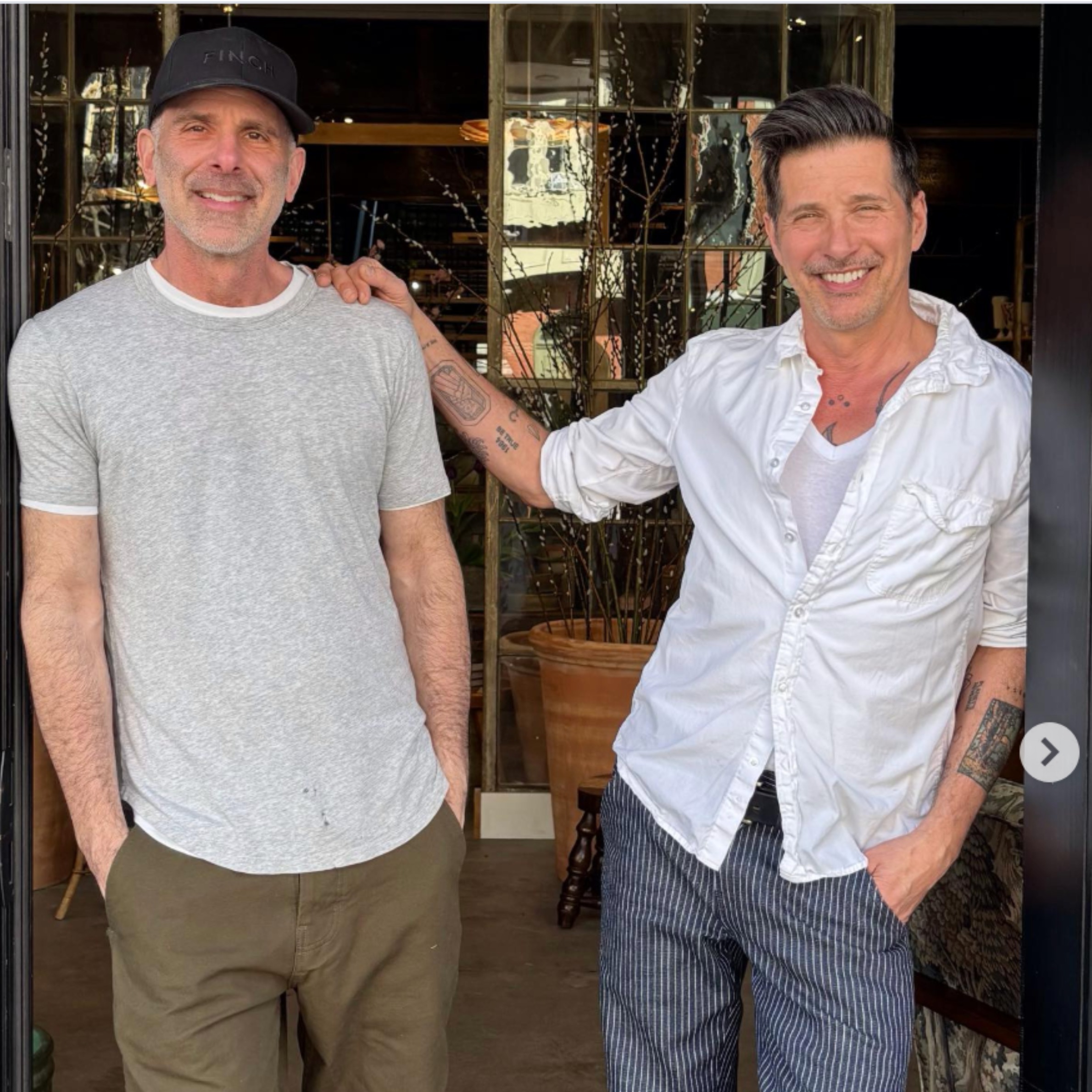
 Cidiot® sits down with Andrew and Michael, the duo behind FINCH, the Hudson lifestyle store that mixes vintage furniture and art with new design. Mat gets into how FINCH actually started — the leap from Andrew's career building luxury fashion stores and Michael's background in finance to opening a shop in Hudson. Plus, the genuinely sweet story of how a bird's nest (and a very confused house painter) gave the store its name.
They also talk about growing a home and lifestyle brand beyond one storefront, the pull between staying small and going national, and how ventures like Sexy Gardener and their new bench and tabletop collection with local artist Helen Dealtry fit into that vision. And Andrew and Michael let two pieces of actual breaking news slip on tape: their new Tomato Leaf candle, and a scent launching this fall they almost swore Mat to secrecy over. Find out in the last episode minute!
Special offer for Cidiots
Want to discover the unique, layered shopping experience you're hearing all about? Visit FinchHudson.com to shop online and check out Michael's playlist, or visit the flagship store on Warren Street in Hudson — open every day. Celebrate the new scents with 10% off any new FINCH candle or room spray when you use code CIDIOT at checkout. One use per customer, for a limited time. Thanks, Finch!
Recorded at Upstate Podcast Studio in Kingston, NY and edited by Drew English
©2026 MCZ Media LLC. Cidiot® is a registered trademark.
Andrew: [00:00:00] Do you remember the first month that we opened and we, 'cause we, we had all this great stuff, but in some cases we didn't really quite know, like, how to price something- Yes ... or what to do. All these dealers are coming in, buying our, our- So- ... our vintage pieces that we had because they were priced too low.
Oh. So they were, so we had a great month. We had a huge first month. We were like, "Oh, my God." They were like- "We're never gonna do this much again." "
Michael: The dealers are buying our things. Maybe..." And then selling them in their... Like, "We maybe don't have this priced correctly."
Andrew: We learned quickly. Yes, I mean- We, we did learn quickly, but we had no idea.
Yeah. We had no idea what we were doing. It was like a whole new
Michael: thing for us. Local dealers are buying our pieces and reselling them. Oh, wait.
Music: Down in the valley moved up from the city. It's a new way of living, and I'm trying to get used to it. One part cool is half an ounce of an idiot. Ordered a Manhattan and they called me a cidiot.
At first it hurt my feelings, but it's kinda gotta ring to it
Place but I'm trying to keep fitting in
You look for silver now. I'm a cidiot. I'm a...
Mat: cityiot. I'm a cityiot I'm [00:01:00] Matt Zucker, and this is Cityiot, learning to live and love life in the Hudson Valley Today I'm sitting down with Andrew and Michael, the guys behind Finch, the Hudson lifestyle store that mixes vintage furniture and art with new design.
And honestly, if you've been to Hudson, you've probably already walked through their door. I have a personal soft spot for these two amazing people. They were some of the very first people that Brian and I met when we moved up to Tivoli. We are practically neighbors, as close as you can get to be neighbors upstate, on opposite ends of the same orchard.
Very country, I know. And Finch is where we bought the very first piece of furniture we owned up here, a navy lounge chair we still have, which we took turns in sitting in front of our fireplace that first winter because it was literally the only thing we owned. So in this episode, we get into how Finch actually started, the leap from city life and Andrew's career building luxury fashion stores, and Michael's in finance, to opening a shop in Hudson with basically [00:02:00] no idea what they were doing.
And even where the name Finch came from, which is a genuinely sweet story involving a bird's nest and a very confused house painter. We also talk about what it takes to grow a home and lifestyle brand beyond one storefront, the pull between staying small and going national. They've launched Sexy Gardener, and more recently, their own bench and tabletop collection with a local artist.
Could they create Hudson, New York's first national brand? And stick around, because Andrew and Michael let two pieces of actual breaking news slip on tape: their new tomato leaf candle, and a scent launching this fall that they almost swore me to secrecy over. You'll wanna hear them explain themselves.
Let's get into it. Hi, guys.
Michael: Hey. How are you? How are you?
Mat: I'm so glad you're on City A.
Michael: We're so happy to be here. Yeah, yeah. Thanks for inviting us.
Mat: Yeah. I mean, I was thinking as I was driving down here to Kingston, we're recording here in Upstate Podcast Studio, and as I was coming down, I passed where we both used to live.
Michael: Yes.
Mat: And I'm sure you know that you're [00:03:00] among the first people we met when Brian and I moved up to Red Hook. Yeah. Yeah.
Andrew: That's true.
Mat: And we were even neighbors sort of, as much as you can be neighbors upstate,
Andrew: right? On opposite ends of, of Mead Orchard. Oh,
Mat: yes. Yeah, that's right. We were, like, on opposite corners- Yeah
and then, and then we didn't even know until we met you that you got permission to walk the dogs through it. Right.
Michael: Yes.
Mat: And so we asked, and they said yes.
Michael: Yes.
Mat: So we used to hike through- Yeah ... which I thought was the most, like- Yep ... country thing to do.
Michael: I, I, I did it- Oh, it's beautiful ... once or twice a day, yeah, with the dogs.
Oh,
Mat: really? That often. Yeah.
Andrew: Well, and he loved that we were doing it- Yes ... because our dogs would go after their groundhogs, so he was very happy
Michael: about that. Yeah, so Chuck was w- very, 'cause he would like, you know, he was a, he was a good groundhog ca- uh... catcher, so Ch- Chuck was really happy about that. Oh, that's funny to think
Mat: about.
Yeah. Like, nice things in the country also have a reason. Like- ... everything on a farm- Yeah ... has a reason, I've learned.
Michael: Right. Right. Yeah, so he was like a t- 10 to sometimes 15 a year, so Chuck was very happy. Oh, my
Mat: God. Oh, cool.
Andrew: Yeah.
Mat: Well, anyway, I mean, everyone knows, you know, our, our origin story here, but, like, what a- what about you guys?
Like, what, [00:04:00] what brought you up here? Like, how, what, what happened?
Andrew: Well, God, it really, go ahead. Now it was like probably 18 years ago-
Mat: Yeah, you were way before us ... that
Andrew: we bought our first house up here. Sure. Um, we were kind of- Weekend house. Yeah, weekend house. We, not too dissimilar, I think, from a lot of people who end up here, that we were looking for ways to get out of the city.
Yeah. Um, you know, living a very crazy, frenetic life in the city and working very busy jobs and And eventually kind of at the point after, like, 12, 13 years in the city thinking, "Where can we go? What, what- Do we go out east? Do we go to Fire Island? Do we go to, do we go upstate?" You- I'm just trying to figure that out.
Michael: But we also had a, we also had a house, a shared house in Provincetown. That's really where we went for weekends. Oh. And so- Nice We did
Andrew: that for many years ...
Michael: it was just a lo- You know, there was a moment when you could actually fly for a really low price from Newark through Boston to the Cape, and so we did that.
Uh, and then, you know, eventually we, um, the price kept going up, and then we got a dog, so you had to drive it. Yeah. So you're driving 95 to P-Town for the weekend and back. So [00:05:00] it was more of, like, um- Which was sometimes not fun ... it was, it, it became m- You know, what can we find that's a little closer- Yeah
that we can have of our own. You know, shared houses can be wonderful with friends, but you can also never get out of that environment of all people all the time. Right, right. And we kind of wanted to have, you know- We
Andrew: wanted to have somewhere quiet ... a little bit more quiet ... something to ourselves.
Michael: As, as we got older,
Andrew: it was better.
We also, we, we also had quite a few friends up here, so we were starting to come up, and, and we would shop in Hudson and do the whole antiquing thing. But, but we also had some friends up here who had houses prior to us. So we kind of got bitten by that bug. You know, like, we would come up for the weekend.
We'd see what they had. It was always very social. We had great dinners at their houses. And, and so then we were just sort of, like, randomly looking. We didn't even have a plan to do anything. We were randomly looking, found this farmhouse in Tivoli on the market that we went to go see that same weekend, and we bought it.
And it was just- It was literally
Michael: the first house we saw.
Andrew: It was so, be- because we bought it because we thought, "Okay, there's this, this h- beautiful, you know, 18th century farmhouse with five barns, beautiful property up against an orchard." It was just, it was so idyllic, [00:06:00] and it was the price of a studio apartment- Yeah
in the city. And so- Isn't that funny how
Mat: that
Andrew: works? Yeah. And so we're like, "How do we not do this?" Right. So, so that's what we did.
Michael: But also my, my dad grew up on a farm. I spent weekends on a farm in South Dakota, uh, when I was growing up. And so for me, I've always, always dreamed of having a farmhouse. That was, you know, it had been sort of that dream long before we even, um, did this.
Um, so you sort of have that. And my sister's always told me, "You wanna f- think about, focus on what you want, and then visualize it, and it'll, and it's gonna happen." And she's kinda right. You know, it did. Yeah,
Andrew: it did happen. Yeah. Yeah. But the barns were all, like, around the house. There was a, there was a, we call the chicken coop a barn, but it, 'cause it was, like, kind of a big chicken coop.
But there was a chicken coop. There was, there were two barns right next to the house. The apple barn and then the- There was the apple barn, and then there was the huge barn. They were all just all right there. Yeah. But as soon as we had to start replacing sills and replacing roofs- Yeah ... we're like, "All right.
This is- Yeah ... this is a little bit too much." Yeah. So we decided to downsize.
Mat: Yeah, we get in over our heads. Yeah. Yeah, too. There was
Michael: also five barns where we only used one.
Mat: Right. Yeah.
Michael: You still have to keep up all of them.
Andrew: To throw junk into.
Michael: Yeah. There was that.
Mat: And did you [00:07:00] find, like, I've talked a lot about my, how to, what it's like to acclimate, and that is just different up here, too.
Did you find yourself acclimating? Was it very natural for you because you were a, a child farmer?
Andrew: No, we didn't know anything.
Michael: Uh, I mean, I mean,
Andrew: it
Michael: gave- I mean a child, a child farmer ... it gave me the opportunity to, you know, build a vegetable garden. That was kind of amazing. Um, and I'm an out- I like, I like being in the garden.
I like to create peren- perennial gardens, and so I was out all the time. I think Andrew spent less time outside and just enjoying-
Andrew: I was a little bit more of an inside mouse at that point. Yes. You know, it was great. I mean, we loved it. Sure. We loved, we loved having the space. We loved having fun with it and having people over.
We cam- became much more social here because we were always so busy working in the city. So we never, you know, during the week, you're just doing what you're doing. You're working 12 hours a day, you're running around, you're just doing what you have to do. You go to the gym, whatever. And up here, we were always going to dinner parties and always seeing a lot more people, so it just became a very social thing for us.
And, and it turned into just, you know, where we wanted to be for holidays, and where we wanted to host [00:08:00] family. And, and it just kinda turned into that. I would cook all the time, and so that was fun. That w- that was really fun.
Mat: And so wait, what was the turning point to become full, full-timers? That's a big moment for people.
Was for us-
Andrew: As I said, we were up here on the weekend. So it's like, you know, initially it was, like, sort of like every other weekend that we were here, until we got to, we started to go, come up every weekend. And every weekend started to turn into, how can we be up here full-time? Yeah. Because we loved it so much.
And at the time we w- neither one of us was in, were in jobs that would allow us to be here. And this was, of course, you know, pre-COVID, so no one, working remotely just wasn't a thing. You had to be in the office. Right. And I worked in f- I've worked in luxury fashion, and I had to be in the office. Um, Michael was in f- finance for a promotional marketing company.
You had to be in the office. Like, it just wasn't a thing. Michael was transitioning out of a job. Um,
Michael: yeah, I mean, you can talk about that. Yeah, yeah, no, I mean, I had, I'd sort of ended a career that I, I didn't really wanna continue. And so, uh, I d- wasn't sure what I wanted to do. But I was, you know, I sort of created an exit for myself that'll gave me, [00:09:00] you know, some time where I didn't have to work, which was great.
Uh, and that was sort of like, gosh, I kinda like this you know? Uh, how can we figure this out more full-time? You know, it sort of, uh, it felt like a luxury, but also felt like something that we could e- you know, why not? Why can't we figure this out? We both loved being up- upstate.
Andrew: I was also kinda miserable at my job, so I kept, kept on thinking like, "You know, this isn't fair.
You're doing this. You're leaving your job." Right. "I need to leave my job, too." So we kind of just on a whim- Which
Michael: sorta makes so much sense. Neither one of us should have jobs. Perfect. It
Andrew: was like, you know, and certainly not old enough to think like, "Oh, this is gonna be a retirement thing." Like w- we, we were thinking, "Okay, this is the time.
W- we are putting our apartment on the market. We're gonna sell the apartment. We're gonna move up to this house full-time," and we did it. And we just like, uh, uh, we were conceptualizing the whole idea for Finch, and realized very quickly after the first year of, as we're planning, before, you know, 'cause we had to find a lease, we had to find a space, we had to build out the space.
Like, there was so much stuff that went into it. Buy, find product for the store. [00:10:00] That one of us had to go back to work- Yeah ... because we just went through too much money too quickly- Right ... just living.
Michael: It's, it's- And- It's that, that idea that, you know, we just weren't prepared to be poor ...
Andrew: and we also needed health insurance.
We
Michael: just hadn't-
Mat: Yeah. Well, it's reality too. Yeah, it's
Andrew: reality. Like, you know. Yeah, like everyone has this idea of like how glamorous it would be, and just this- Yeah ... it's this, it's this- Like
Mat: Baby Boom, with Diane Keaton.
Andrew: Right, right. Something like, I mean, like- Right, exactly ...
Michael: we had good jobs, so that didn't mean we could spend all this time not being paid anything.
It was a bit of, a little bit more- Yeah ... of a shock. Yeah. I mean, I guess we should've thought
Andrew: about that ahead of time. So I went, I went, I went back to work full-time. Yeah. But yeah, like Baby Boom, because you know, all those things do happen. Like all of a sudden your well is dry, and you're like, "What do I do?"
Mat: Yeah, it takes all the time
Andrew: too. You know, you need a new roof. I, who do you call? You can't- We had to replace the- the roof in the barn You can't call your super, so you're like- "What do I do?" I
Mat: know. I miss having a super.
Andrew: I know. Oh, my
Mat: God.
Andrew: I know. That was great.
Mat: Yeah. Hi, Brian.
Andrew: He's your super. Yeah. Is he good?
Is he, is he good at fixing
Michael: things? I think that's, uh, for a lot of people who come up, they realize that, that, you know, they used to have these things taken care of. Now they have to do it all themselves. Yeah. Yeah. Or find somebody to do it. To- Yeah ... it's different. It's def- You know?
Andrew: There's definitely, there's definitely a learning curve.
Michael: Right. Yeah.
Andrew: There's a
Michael: learning curve. Yeah. There, there, that, [00:11:00] the city part of that sorta comes into it. You're like, "Oh, shit, I have to-"
Mat: Yeah ... "
Michael: I have to, I have to do all this."
Mat: So talk about the beginning of, of Finch, 'cause, I mean, we got to know the business right away 'cause we moved up here, and we had no furniture.
So one of the first things we bought, we had this, like, living room with a fireplace. Yeah. And we bought a chair from you.
Michael: Yeah.
Mat: And this is r- We still have it. It's this really comfortable, um, navy lounger. We bought a Danish clock too. Which I love. But the chair's the only thing we could sit on, so we took turns-
sitting on it in front of the fire- Uh ... ... for our first winter. I love that. It was hysterical 'cause everything else took, you know, forever to get there, but that was our- It's, uh- ... our first impression of Finch ... so, so one of you
Andrew: stood and one of you, one of you sat? Yeah, 'cause we sat
Mat: on the floor or something.
It was hysterical. We would take turns
Andrew: on-
Mat: Well, we kind of- ... on your
Andrew: chair We did that. We, we had... You know, we had no furniture when we bought our house either, so we had nothing. Oh. And this is like, we were walking around after we bought this house, and we're walking around this huge house, and it was almost 4,000 square feet.
Michael: Yeah, it was like- Like- ... just silly. Yeah.
Andrew: And we had nothing, and our parents thought we were both... They thought we were crazy, that we'd totally lost our minds. Also, from Michael's point of view, because his family [00:12:00] comes from farmhouses. My family doesn't come from farm people. We're not farm people. So th- they thought we were crazy for different reasons.
But, but we literally had nothing. This was before we were in the business. So we were, like, scouring places in the area looking for, like, a good deal, looking for a secondhand sofa, looking for, like, whatever we could find. Our- A chair, so that we could sit in a
Michael: chair ... our first dinner we took takeout, but we f- there were apple crates in the barn that we found- Yeah
the old apple crates, so we, we s- we used those as seats for the first-
Andrew: Well, and we had mattresses delivered so that we at least had places to sleep.
Mat: Right. Right. We had a mattress too.
Andrew: Yeah.
Michael: But kinda like that was our first- Yeah ... our first takeout night was on apple crates.
Andrew: Yeah.
Michael: Yeah.
Mat: But okay, so tell me about, uh, Finch.
How did, how did it start, and then, and the name too? Well- I always thought that was interesting.
Andrew: Well, so as part of, like, our process when we were, when we were, uh, leaving the city, part of what I was doing in luxury fashion was building stores and working with an architect who I'd worked with for many years designing and building stores.
And we started to kind of off to the side, we were starting to have these conversations, like, "Hey, we w- we're looking to create something upstate. I don't know [00:13:00] exactly what this is yet." It still was kind of in its incubator stage, but I, I had spent a large part of my career traveling around the world visiting amazing lifestyle stores, and then coming back here and thinking, "This doesn't really exist."
Like, maybe there were one or two things that were like that in the city, but didn't real- did- definitely didn't exist in Hudson.
Michael: In Hudson, yeah. It was very traditional.
Andrew: Yeah. And, and so we started to think about that. You know, there's always been great antiquing in Hudson, always great stores, you know, pioneers that were up here that were doing this in the '80s and the '90s and, and so we certainly weren't pioneers.
But we came in thinking we would create a lifestyle experience, multi-brand, multi-layered product with vintage being the core of it- Hmm ... but definitely adding in a bunch of new things. Right. We weren't at that point, we weren't doing anything with apparel or anything like that, but it was- Yeah ... objects, art, new pieces-
Michael: And,
Andrew: and-
new, some new furniture ...
Michael: because we knew a lot of the dealers 'cause we'd been coming up e- even before The Weekend House, and then once we had Our Weekend House, we, you know, shopped Hudson a lot. There was, you know, [00:14:00] the dealers were all, you know, they're very traditional antique dealers essentially, so they all kinda thought we were crazy.
Like, "You can't mix- Yeah ... vintage and new things. No one's gonna, like, no one's gonna understand what's happening here." Uh, and then of course, you know, f- uh, one of the things that we, was very important to us was to, um, have it be visually interesting 'cause a lot of antique stores, there's like, there's stuff.
They're kind of beautiful things, but there's a, a table, and there's another table on top of that, and there's a chair on top of that, and, you know, there's- Yeah, that's
Mat: true. When I walk through a lot of antique stores, they're not... Like, it's fun, but it's not attractive. It's not
Michael: very well merchandised. It's, it's a discovery, right?
Right. So like, it dis- it's discovery, which can be fun, and a lot of, some people do like that and- That's
Mat: hard. It, it... You have to work at it. Yeah. But,
Michael: but for, for, you know, a- and, you know, particularly Andrew's experience with all these stores around the world and our desire to have something a little bit more interesting, the experience needs to be visually interesting as well.
So there was a lot of things that we were doing that we thought, "This doesn't, this is what's not happening in Hudson, which we think would be interesting," and we sort of set those things up as required for what we had put together. And one of the other things is that, like, talk to people. It's interesting how some of these antique stores, you don't...
Unless you, unless you engage them , [00:15:00] you're not necessarily gonna get this sort of active communication from- Right ... some of the
Andrew: dealers-
Michael: Right ... necessarily. And so it's like, have good music, you know? Uh, so there's things that,
Andrew: that- But do you remember, do you remember the first month that we opened and we...
'Cause we, we had all this great stuff, but in some cases we didn't really quite know, like, how to price something- Right ... or what to do. Oh, I'm sure. All these dealers were coming in, buying our- So- ... our, our vintage pieces that we had because they were priced too low. Um- So they were d- So we had a great month and we were like, "Oh my God."
We had a huge first month and we were like- "We're never gonna do this much again." ... "The
Michael: dealers are buying our things maybe, and then selling them in their... Like, maybe we don't have this priced correctly."
Andrew: We learned quickly. Yes, we- We, we did learn quickly, but we had no idea. Yeah. Yes. We had no idea what we were doing.
It was like a whole new thing
Michael: for us. Local dealers are buying our pieces and reselling them. Oh, wait.
Andrew: Yeah, it was, yeah, it was great. So I started conceptualizing the idea for Finch w- with this architect, and Michael and I were kind of bouncing ideas back and forth with each other. But at that point, we kind of didn't really know what we were going to do.
And then, you know, it all started to take shape. We, we first came up with the, with the logo, with the name, with the logo. We did this whole word [00:16:00] association thing with being upstate, what it meant to both of us, like different things.
Michael: Something simple. It had to be a very short name.
Andrew: Yeah. And, and it just, and, and when we got to Finch, and we can tell you about how that sort of came about, it stuck, and then we just ran with it and, and developed it from there.
Mat: Yeah. So- Yeah. Well, yeah, tell me about it. I'm fascinated by words.
Andrew: So, so Finch, when we were, we were having the house painted, we were doing all sorts of work, and, um, there was a bird's nest on the lantern, on top of the lantern on our front porch. And so when we were painting it, we said to that, to the, to the house painter, we said, "Just be careful and paint around it."
Yeah. Because we, we- Don't worry. We-
Michael: Don't paint this whole section. He's looked at us like, "Really?"
Andrew: He's like, "What?" Like, "It's a, it's a bird's nest." Like, "What's wrong with you people?" Again, we were still in that sort of like, you know, like, like, you know, like big, shiny, like everything is new and beautiful, and we're in the country, and it's just so-
Mat: Right,
Andrew: everything,
Mat: nature's beautiful.
Andrew: Yeah. Right. Yeah. And so we thought, we thought, like, "Let's leave it alone. Let the birds hatch. Let the eggs hatch, and then you can paint after that." And then later on, uh, we figured out that it was a finch nest, and so we were like, just kind of like throwing around finch, finch, [00:17:00] finch. And that's it. That's how it came, came about.
Oh,
Mat: that's really nice.
Andrew: Yeah,
Mat: yeah. You saved, you saved a life.
Andrew: We saved a life. Our painter was really mad at us. We- But we, but we finished painting the house. He was fine. Yeah.
Michael: But it was funny.
Andrew: Yeah, it was funny.
Michael: He, he did think we were a little strange.
Mat: And so finch is, like, a native bird up here? Like, I wouldn't know.
Andrew: Yes. Yeah. Actually, we have, you know, w- which is really kind of amazing, lately, I don't know why this is, but we have all these goldfinches on our property. Oh. And they're, they're beautiful. If they're... And they all seem to, like, travel in, in... Like, I don't know what the- They're, yeah, there's a yellow, yellow-
flocks. But there's like- Yeah ... they're really yellow. Yeah. They're beautiful, and they're just all flying around the property.
Mat: I really don't know my birds from my birds. You know, like, I just, I... Th- that's a blue bird, that's a green one, you know?
Andrew: Yeah.
Mat: Should probably learn something. You
Andrew: would probably know if you saw a turkey vulture.
Maybe you would know that.
Mat: I would know a turkey vulture. Yes. I see them. Yeah, they're, they, they're just huge. Yeah, 'cause I think about what's gonna happen.
Andrew: You're right. And
Mat: they're scary. Exactly. They're nasty
Andrew: looking. Why, why is it circling my house?
Mat: Well, what about what, from your perspective as a store owner, you must...
I mean, your stores are, your store is very popular. You get a lot of weekenders. You probably get a lot of locals, too.
Andrew: You know, it's [00:18:00] kind of a mixed bag for us, because we, we do get, obviously we get tourists, and we specifically get more tourists on the weekends. But we have a lot of people with second homes up here who are, who are shopping for furniture, who are here on the weekends.
Um, but we do get locals, and we get lo- we get people from north of Albany, we get people from the Boston area, we get people from all over.
Michael: We want everyone. We want tourists, we want everyone who, who's in Hudson, who wants to experience something to come into our store. So we, we, yeah, so ev- we, we kind of love all of them.
That's
Mat: good. Yeah, talk, talk about- Yeah ... the Sexy Gardener line, because I think the shirts are kind of new, but you've had it as something else for a while. Like,
Andrew: how did that- The
Mat: candle,
Andrew: the candle
Mat: we had for a while ... how did that come about? That started as a candle?
Andrew: Started as a candle. It was, it was part of our candle line that we've had for a while.
We've been doing our own candles that we've been making locally for a few years now. Yeah. Yeah.
Mat: Yeah, I didn't notice it until the T-shirts started coming out with the, they're funny to like- Well,
Michael: we just, I mean, we, our, our, our, the way we view that is that the term Sexy Gardener c- is not, cannot, it doesn't have to just be one product, right?
You can create a whole line- Yeah ... a whole, it becomes its own product cate- you know, whole category of things- It's so funny ... that can come around the term Sexy Gardener, 'cause it can, it [00:19:00] has, it has a lot, it's funny. That's helpful, right? You n- you can, you immediately think of somebody, or right? So there's- It, it
Andrew: always makes
Michael: people laugh
so it's a, um, it, you, you can sort of, I mean, we, we're, we're gonna work on this, but at the moment it's just scent, and a couple, a bit of apparel. And, but I think we're gonna try to have fun with it, turn it into something even bigger maybe. Yeah. That's
Mat: kind of the goal. I would too. I think it's very much, it also feels very Hudson Valley.
Andrew: The gardening thing for us, and specifically for Michael, but I've been getting a lot more into it lately, right? I'm outside a lot more than I- You are ... used to be. And I developed a l- a, a kind of a good nose for things like that when I was working, um, at, really going way back when I was working for Vera Wang, because I was there when she was developing her first scent.
Mat: Oh.
Andrew: So I remember being a part of conversations about, "Here, smell this," or, "Look at this bottle," or that kind of thing. So w- I was sort of in it, and that's, I think, how I first got interested in it.
Mat: Yeah.
Andrew: Um, but we started doing the scent development with the guys from Source Adage. And- It was fun. And Michael said to me, he's like, "Whatever you do with the candles that you're creating," he said, "I want one that smells really sort of green, like fresh cut [00:20:00] grass, really herb forward."
You know, and, and, and that's... And we created- This is, this is, it's, it's a really, really good scent. There
Michael: was a scent, um, when, you know, this is going way back. This is going back. So it might be before your time, sorry.
Andrew: This is
Michael: going, this is going back, like, 30 years. Uh, so when Gap first came out with, um, bath and body, right?
They had whatever number of scents that they brought as their first introduction for the national market, and one of them was called Grass, and it was amazing. I mean, it literally was cut grass. It just smells like grass. It was just- It was great ... it was, like, the perfect, perfect scent. Do you remember that?
I do. I think- And so I remember, I just, I just remember that scent- Yeah ... and I remember l- loving it. So that, so that was sort of- And, but then they- ... like, that memory ... and then they canceled it ... kind of like, let's make sure it has a, a very- But this continued ... Sexy Gardener should really be very grass. And it's not just that, and, you know, it's not quite the same as the one from-
Andrew: No, it's, it's, it's definitely- Because-
it's pretty layered. Yeah. It's pretty layered because it's filled with tons of herbs and, and, and grass, and, like, you just... I can sort of tell when I say this that I understand what it means, but I understand that a lot of people may not get this, but to me it smells green and crunchy and fresh, and, like, you just...[00:21:00]
Like, I'm using my hands like it's green- Yeah, yeah, yeah ... and crunchy. But there's just something about that, like, really sort of Bright green. You know, it's just, it's so good. It's so good. Yeah. So we know we have a new one coming out this week, actually.
Mat: Really?
Andrew: Uh, it's been in the store- Breaking news, everyone.
Breaking, breaking news. This is breaking news. It's called Tomato Leaf.
Michael: Yep.
Andrew: So Tomato Leaf is, is another very bright, fresh scent. Yeah. But the reason for this is- Yeah, there's a,
Michael: there's, there's a lot of tomato ca- I mean, everyone's doing tomato since, you know, so Flamingo Estates out there, everyone's doing tomato candles.
There's, there's so many of them out there. Tomato candles are- There's a lot of them are really good, too ... tomato candles are
Andrew: definitely having a moment right now. They're,
Michael: they're, they're really good. But, um, this was really about the tomato leaf, and for me, um, 'cause I love growing tomatoes specifically, and, uh, and I've al- I've had this from the fairly early stages of the garden, I keep doing this, is that I have at least 24 to 30 tomato plants that I'm growing, which is really not necessary- Which is absurd
for two people. Right, you always have too many, right? I
Mat: mean- Everybody always has too many
Michael: tomatoes ... you know, there's two of us. Too many is
Andrew: an understatement.
Michael: So, um, you know, they get- It's, it's ridiculous ... at, at some point in the season, there'll be basketfuls that we just take to the store, and we g- When I f- when we were living in the city- Oh, we'll bring you
Andrew: some
Michael: we actually took it to the, to the, [00:22:00] to my- to o- our offices and shared it with people. And now, of course, I bring it to the store and share them. But the purpose of that is really not to have all those tomatoes, but it's 'cause I enjoy tying them up, right? So I'm create bamboo trellises, and you, and they, and they grow.
Like, they grow to six feet or more, and then- Yeah ... uh, but during that time, you have to tie them up, and you have to clip the leaves, and, and, um, so the, all that, that activity of touching the vines and the leaf as you do, as you're tending and sort of trimming up the tomato plants as they grow, is that s- very specific scent.
Your fingers get a little green, and then they sort of, that, that oil s- s- uh, so they turn a little black. But that scent that you have on your hands from the tomato leaf is that sort of that hu- just a c- it's a very specific scent. It's not tomato. It's tomato leaf. We captured it. And that's the scent that we captured.
We bottled it. And actually, this one really worked well. This one- Oh,
Mat: that's so cool. It did work well. I wonder if what's in my head is what it's gonna be.
Andrew: It's got citrus in it, too, so it's tomato leaf citrus that's, it, you know, it makes it a little bit brighter.
Mat: Okay.
Andrew: But you definitely get tomato leaf.
Yeah. It's, it smells great. It smells great. Yeah. So that we turned into, into rooms, right? And then we also just launched bar soap. So we're like, you know, [00:23:00] we're turning this into a much bigger- Try ... much bigger thing.
Mat: Yeah, I was gonna ask about that. Yeah. Like, you know, you start, you start curating furniture and selling it from other places.
Then you introduced your own products and brands, and now you're doing some new ones as well. So this is, like, a different- This is additive
Michael: Yeah. So we're actually started a- we're starting to, to, to create our own product, to create Finch as a brand in the national market. That's kind of the idea. So we started with, you know, we have a, our first bench, and we did a collaboration with John Derian, and d- that was our first Finch product, uh, that we brought, that we, that we launched.
And then we did the bench in, uh, November. Now we have the scent lines, um, that we're doing. We just introduced this in, in, in mid-June. We did a collaboration with a local artist, a watercolor artist. Her name is Helen Dealtry. She's amazing, and she's such a sweetheart. Uh, so we used some of her watercolor, um, art and introduced it into part of our 12...
We have a 12 SKU tabletop line that we brought to the market, uh, in June, um, that Andrew, uh, designed the whole, the whole thing. Uh, but we're using some of her art. [00:24:00] So it's- keeps it local, and it's also beautiful. So that's our really b- first big product introduction that we're trying to just grow and build our own...
We're, we're trying to create a brand, uh, in the market that is our own, in addition to, and keeping vintage as a core. But, you know, our... You know, we, we, we just wanna see if we can find a way to make this a little bit bigger and introduce Finch to a, a broader audience.
Andrew: I mean, I think what we realized is that, that creating this sort of multi-layered experience is, is really the direction that we wanted to go in.
And so you can walk in, as you know, you've been to the store many times, that you walk in and you can, you know, you can come in looking for artwork. You can discover some beautiful ceramics, vintage ceramics. You can find the tabletop that we just launched. You can buy a sweater. You can walk through the apparel.
You can look at bath and body. We carry Malin+Goetz. We carry Aesop. So we have all sorts of stuff like that. Um, we have fragrance now from a few, a few other people. We added women's apparel, uh, to the second floor of the store. And, um, so it's really a kind of, for [00:25:00] us, it's, it's always been sort of a place for discovery.
And people come in, and they just, they, they, they love the way it smells. They love Michael's music. M- Michael's a closet DJ, by the way. So he- we've got, like, maybe not so, so in the closet anymore. But we, but we've got, like, how many mixes do you have now? Uh, I, I'm on- Like,
Michael: a hundred and, 120 mixes ... 104 are complete- Oh, 104
and I'm on 105 now. So, um, they run the store. His music mixes are great. Um, they're available on Spotify and Apple 'cause people keep asking. Uh, and-
Andrew: Oh,
Michael: really? They ask what's being played
Andrew: in the
Michael: store? Yes, all the time ... so, well, I, I see people trying to Shazam things. I'm like, "You know, you can actually just, you get them all if you want."
Oh, funny.
Andrew: We have a thing at the ca- at the counters now where you can scan it so that- Yeah ... it goes right to it. We, we, we used an old photo of Michael that I took- ... from, from 20 years ago when we were on VHS, and he looks like- I think we should just keep
Michael: that
Andrew: one ... it's like an album cover. He's got, you know, his, his windswept hair and his sunglasses-
and his shirt open, and he's tan, and, like, it's like- But
Michael: each of the mixes is- You know ... four to five hours long, so they're, um, so I sort of knock them out about once a month. The music is great.
Andrew: It's really
Michael: good. Uh, but again, part of that is, you know, it, for, to create an experience, the, the vibe and what you hear, and, you know, people come through, and they start [00:26:00] snapping.
Sometimes kids dance with their parents. You know, it's really kind of a nice that it's b- j- a vibe becomes part of the experience.
Mat: Hey, Cityats. Wanna discover the unique layered shopping experience you've been hearing all about? Visit Finch. finchhudson.com online to shop and see Michael's playlist, or come visit the flagship store on Warren Street in person.
Open every day, and celebrate the new scents with 10% off any new Finch candle or room spray when you use the code CITYIT at checkout. One use per customer for a limited time. Thanks, Finch So you're making all these different things. I'm sure you have to choose between a bench versus dishware versus scents.
Like, there's some, there's something, there's some through line there too. But I'm also curious about, like, where's it going? Like, what do you, what do you want it to be, or are you, are you feeling your way through this? You guys seem very intuitive.
Michael: Well, I think part of this is to create something bigger and, and, and we, you know, we did have these long conversations about how do we expand, right?
Yeah. And, and one way to expand would be to open [00:27:00] up more Fin- you know, Finch retail stores. The problem with that- More
Mat: little
Michael: birds ... problem with that, right? Yeah. So the problem... we need to find more birds.
Mat: More nests.
Michael: But the problem with that is that, you know, um, it's expensive to open up a store. Like, if we wanted to open up a store somewhere else, it's just, it takes, takes a lot of money.
Um, we don't necessarily have that. And it's somewhat marginal, right? A, a retail store c- can be only marginally, uh, pr- uh, profitable, so it, it may or may not be a success to expand retail specifically, right? The world now is digital. It's not... And we think retail is very important, and we think the, the experience that people have coming into the store is really important.
But to expand, um, you know, digitally is where the, the world's moving, and we thought we should be probably thinking about this from a how do consumers, how can consumers across the country, um, play, you know, come p- be a part of the Finch brand? And to do that, you have to create product that, one, is shippable, an- and something that we can put out there in social media and start looking about building the brand digitally, and that's really more exciting to us.
It's also gonna be more exciting to an investor, and we do need an investor to make this bigger. [00:28:00] Uh, my goal is to create, to build this brand, start building the national audience, getting sales cadence, and then hopefully get an investor to then maybe open up more stores that supports that. But ultimately, you know, it's to create Finch as a brand in the national market, and I think that'd be great to have this sort of national lifestyle brand that, um, sort of was born in, in Hudson, New York.
Andrew: I mean, all, all, all that being said, and it's, it's, it's, you know, that's definitely the focus for us now, trying to reach a national audience. The physical store environment is also hugely, hugely important, um, because there are still people who crave that tangible experience. You know, there's a little bit of, in some cases- I think
Mat: most digital brands have discovered they need some kind of physical-
Andrew: Yeah
Mat: experience to be successful.
Andrew: And I just, I just think, I think that people crave that. It's just, you know, you want to touch and feel and smell and be in this experience, and I think that's why, one of the reasons why we are successful. You know, we've created this environment for people to, to really discover all of the different layers of things that we [00:29:00] offer.
And
Michael: we're actually having a really, really good year, and I think part of that is that by putting ourselves out there, right, by making us part of the brand and our lifestyle and who we are and what we bring to the, to the, to the brand and to, and, and to what we do, um, has really increased not just the awareness, but pe- we have a f- more traffic, and we have people coming in just saying, "God, that was such a cool thing that we saw the other day."
And I didn't expect that, you know? Yeah. It's one thing to create it just so that we can build a national audience, 'cause that, you need the social media for the digital part of this. But it has really... It's kind of been nice that it has had a really positive impact on our, you know, regional and existing clients, so.
Andrew: Well, it's always, it's always extremely validating when people come into the store and they either, they make a comment like that where they're seeing things that are on social and that they really identify with in whatever sense, or when they come into the store and have the experience that they have.
And it happens all the time that people come in and they talk to us about the store, and they just, they really enjoy themselves when they're in the store, and they come to tell us about that. And that, you know, it's, it's, it's really, it's, it's amazing to hear that from [00:30:00] people, that we've touched people in all these ways- Yeah
that they just, that, that they just are really enjoying being in our space. Never gets old.
Michael: It's
Andrew: great to hear. It doesn't get old to hear it. And you know, the thing that I also find als- uh, always astounding is that, you know, I, I know all of these What I always call fashion refugees that are up here from, from people back in- Yes
back in the days-
Mat: Yes ...
Andrew: when we all used to, you know, work like dogs. Like, it was, it was, you know- There's a lot of
Mat: advertising refugees I see as
Andrew: well ... I, I'm sure, I'm sure you do. But you know, like, my- the experience that I had working when I was a kid was very Devil Wears Prada. Like, it's, it's like- ... a lot of that definitely exists in fashion specifically.
Yes. And so you- there's a lot of people up here that I know that are just not doing it anymore. They're retired. They're doing other things. They're consulting and they're up here full time. Uh, but people come into the store all the time, these people who we know who have had very, very high, high level positions within fashion, retail, all of that world, who come in and just, they, they, we, we, we get so many accolades from people of just, like, you know, what we've created.
And it's just, it's, it's kind of ... I don't know. I just walk around be- I may- [00:31:00] maybe because we're in the weeds of it every day, so it's easy to sort of lose sight of what we've actually created. But when you step back and you look at it, and you, and you just sort of really think about that, and you hear that from people, w- I- just at least gives, makes me reflect on it and think like, "Oh, God.
I can't believe we actually created this."
Michael: Well, but it's also a combination of each of us, right? Um, we both bring different things to the table. Uh, I'm the vintage buyer, which w- I have a finance background, so who knew that would somehow turn into something I'm really good at. Um, I'm also, I also really enjoy doing it.
So the vintage buyer. I do all the operations, finance, and accounting. Andrew is really the one who handles any, purchases anything that's not vintage, and he's really head of brand. So he's the one responsible for all the visual. He's responsible for anything brand-related, how things look on the website.
He's responsible. He's literally, you know, the head of marketing and head of brand. We
Andrew: try to stay in, stay in our lanes. Yeah. But sometimes there's crossover. Sometimes that's not successful.
Michael: Yes. Like An- like Andrew, Andrew gets to- Most of the
Andrew: time
Michael: it's okay ... Andrew gets to select all of the fabrics for furniture that has to be redone.
But I [00:32:00] try to get my ... Like, I'm gonna get a purple chair in very soon. Oh. I keep trying. It's
Andrew: always the
Mat: purple. I ask everyone about their favorite places in the Hudson Valley. Um, my brother-in-law got me to do this. So somebody comes to Hudson. They stop by Finch. They buy a chair probably, 'cause they need one in their living room to share, or they buy some-
a bench or a scent or something else. They don't know where to go. Where would you tell them to go? They've got a, a d- the rest of the day to kill. Where would, where would you send them? What's your favorite, favorite place?
Michael: Um, you know, it is funny because we, we, we do work a lot, and with this new brand, I mean, we just, we, we don't ever get weekends off, and we haven't had weekends off in 14 years.
I know, but you've
Mat: been here for a
Michael: long
Mat: time.
Michael: So we- We've been here for a long time. So we, and we're also, we're al- We haven't had
Andrew: brunch in 12 years, but only- So
Michael: it's true. Um- But we've
Andrew: been here a long
Michael: time. We're also, um, the store's also very social, right? Because there's, there's not just, you know, p- customers coming in, but friends come in, and people who are customers have become friends, so we're very social.
And I'm not a s- [00:33:00] nec- you know, by nature I'm not a social person, so it takes a lot out of m-me, and it takes a lot... And so w-when we're done, we actually don't do a lot of other things. We go home. We're like, we really like the nest that we're in. I know you just used that expression, but- So, so they can come to your house That's our favorite place.
They can come to our house. Yeah. Um, um, so when people ask, though, I do, I do tell them- Yeah ... um, that there is, and, um, that La Lana is certainly a place that- Yep ... you should experience because it's extraordinary, right? Both for the house, which, you know, is, is, is interesting, but it's the landscape. For me, that's really the most interesting.
A friend of ours, Kate Orne, she has Upstate, um, Diary. Um, it's a beautiful journal that comes out- Yeah ... twice a year that covers- Seen this ... a lot of the artists and what's going on in the Hudson Valley. It's really w- really beautifully written. And, um, and she has, she's connected to art, so she drops cards off, uh, at this there that lists every art venue in the Hudson Valley.
So I make sure when people ask, I said, "This is-" Oh, you send
Mat: them to art
Michael: venues. So I s- That's interesting ... I give them this card because it's, it's, it's just like 45 things on this list that people would never know or, and I don't even know because,
Mat: you know, I haven't been to- Yeah, that's good. I only do art, Upstate Art Week, [00:34:00] and I- Right
during the year, where else do I
Michael: go? Right. Right. So, so, so that is a really good way to let people to, to sort of get on this list and say, "Okay, this is all... I can do this, and I can do this, and I can do this." And you can knock several of them out in a day, so.
Andrew: What about you, Andrew? I send people to f- to, to food. Yeah? People will inevitably- Please ... inevitably people come in all the time asking where they should go for lunch or where they, where they should go for dinner or what they should check out. And I mean, we have our favorites of places that we like to go for dinner.
Yeah, you know, there's so much going on in town, so if anyone comes into town and they're just there for the day, outside of, you know, the e-ease of going over to Alana or something because it's just, it's so close to town and it's a easy five-minute drive outside of town, um, there's so much to see in town, to walk up and down the street and experience, um, outside of food.
You know, I mean, you know that there's all this good food stuff going on. You know, it's interesting, but we were thinking about this earlier because we don't get out that much, and, you know, we were excited to do this because we actually got to Kingston. We're like, "We haven't- I
Mat: know, I love Kingston ...
Andrew: we haven't been to Kingston in such a long time."
This is, this is, it's, it's been, it's been- Yeah, first
Mat: capital [00:35:00] of New York.
Andrew: It's been a while.
Mat: Architecture's awesome.
Andrew: Yeah,
Mat: it's beautiful. The vibe is... There's three neighbor- there's three, like, very different worlds here.
Andrew: So we were like- There's
Mat: probably more, I don't know
Andrew: about. So we were looking forward to that, that we actually could drive out of Hudson and actually go do something.
Um, we are so in the store all the time, but if we can get away, you know, and we can go have a quiet lunch somewhere, like, you know, we'll go to Quinnie's or we'll go to, to Bartlett House in Ghent and- Right ... you know, just to feel like we've actually gone away. That's getting away. But, you know, actually what's getting away for me- Which is, sounds a little pathetic, but what's getting away from me is, uh, going to Great Barrington and going to Guido's.
Mat: Yes, that's very exciting.
Andrew: I love going to Guido's, so I'll go to the bagel
Mat: place- Guido's for Citians, how do I explain this? It's the Citarella-
Andrew: Yeah ...
Mat: of Great Barrington.
Andrew: It's kind of like Ci- ... Citarella and Whole Foods had a baby,
Mat: right? That was a, that was a douchey, bougie Montauk note.
Andrew: Yeah, yeah. No, but it's pretty accurate.
And, and, and so they have, they
Mat: have- Or for Westchester, it's like DeCicco's, but with- ... more space to eat.
Andrew: Oh, yeah, I don't know that. I don't know that reference. It's a
Mat: great market.
Andrew: Um, but we, uh, yeah, I mean, I don't get there [00:36:00] that often, but, but, but I just- You,
Michael: you always light up when you say, "I'm gonna go to G- I have cha- time to go to Guido's today."
Andrew: Yeah, yeah. Not that, you know, I mean, that's, that's the most- Brian will
Michael: go
Mat: with you anytime.
Andrew: He loves Guido's. That's the excitement of my, that's the excitement of my life, having two hours of quiet to go to the grocery store.
Michael: They also have the best dark chocolate non-parills- They
Andrew: do. They do ... so I make him load up on- Yeah.
Yeah. They, you
Michael: should,
Andrew: you should take them everywhere. Like, and my
Michael: mother-in-law likes
Mat: the graham crackers
Michael: It is literally the best I've ever had.
Andrew: Yeah. The dark- Their dark, their dark chocolate is so good. I don't know where they get it. I'm sure their
Michael: produce is good, too, but.
Andrew: But it's re- Yeah, their produce is great.
And their meat market is great, too. But, but yeah, it's, it's, it's all good. It's all good. Oh, you know what? I go all the time, almost every day I go to Morning Star. I mean-
Mat: Yeah, the farm, the farm store,
Andrew: yeah ... I mean, it's just, even if I don't buy a ton of stuff there, it's just- Yeah ... everything is so beautiful.
Mat: Yeah, I love
Michael: that market. But there's another example of it's an experience, right? That, you walk into that, it's an entire, it's exactly what it should be for a, a, a, a, you know, a, an upstate farm stand. Um-
Mat: Yeah, I should do an episode just about farm stands- Because they're- ... because they're so different. Yeah.
And some of them are so intentional and create this very unique- Yeah ... thing for you to go to.
Andrew: Yeah.
Mat: And some are just kinda thrown [00:37:00] together, and there's such a big difference.
Andrew: But, you know, and, uh, there used to be a time when he was growing all this stuff in the vegetable garden, and he would say, "Don't buy these things because I'm growing them."
But I would still stop at Morning Star- Yeah ... and stop somewhere because I liked what they had. But because now- Don't
Michael: buy tomatoes, apparently. So that, that, that, that was his answer.
Andrew: Yeah, yeah, yeah. He
Michael: goes, "Don't, don't grow this 'cause I just like buying it at the farm stand."
Andrew: But so now I d- I've been very good about not doing it, and we, we are using everything from the garden pretty much every day.
Michael: Yes, we do have that little- Pretty much every day ... we have that agreement that we, we should eat, ta- at least attempt to eat everything in the garden. Even if we're giving some a, stuff away, we should always eat something. You know, and every year, you know, um, it, the, the, we always have this also thing to plant something you've never planted before.
Oh, that's really good. And this year we planted kohlrabi, which was really great.
Andrew: Oh. Kohlrabi's
Mat: a- Kohl-
Andrew: kohlrabi, yeah.
Mat: Kohlrabi is a green... What is it?
Andrew: It's green, and it's- Well, it's a- ... looks like a turnip kind of.
Michael: Above ground, though. So it, it- Yeah ... it actually grows above ground.
Andrew: Yeah.
Michael: Uh, and it's more white.
Um-
Andrew: Yeah, it's like, it's like daikon or something like
Michael: that. It's not green.
Andrew: It has, it's not green. No. Well, it's got a green a- ... green outer layer.
Michael: Yeah. It, it's really [00:38:00] more closer to white. Michael's such an idiot. Sort of green, but more white. Anyway, um- Yeah, it looks green ... it is t- it also has- You peel it and then
Andrew: it's white inside.
Mat: What do you do with it?
Michael: Um, it does have that consistency of daikon or- You- ... it's like a crispy, crunchy-
Andrew: Chop it up and throw it in a salad.
Michael: Doesn't have a ton of flavor necessarily, but it's really fresh. Like, it's, it's a good-
Andrew: You can roast it.
Michael: Yeah.
Andrew: You can roast it like roasting, like if you ever roasted radishes Roasted radishes caramelize and they get sweet.
And so it's kind of a similar thing, that this would, like, do that too.
Michael: This, this was the year of kohlrabi. Maybe next year it'll be Asian greens or something. That's
Mat: exciting. Yeah. Thank you guys for coming on. Oh, my God. I'm gonna stop into the store- Thank you ... both for the art card and for Tomato Leaf.
Andrew: Yes. There's another one coming, too.
Mat: Another one?
Michael: The fall.
Andrew: Tell- It's coming. Tell me. I won't tell anyone. It's, it's, it's coming in September. Don't tell anyone. Should we say it?
Michael: You can.
Andrew: It's called Morning Wood.
Michael: Morning Wood. Because it's funny. Funny is good. It's
Mat: really funny.
Andrew: It's, it's, it's... Let me just... I'll just leave you with this.
I'll leave you with this. It's a very- It's- ... uplifting scent.
Mat: Oh, that's great.
Andrew: It's a very uplifting scent.
Mat: That's all you can trademark
Michael: it. That's
Mat: great.
Michael: Oh, yeah. [00:39:00] It's-
Andrew: Coming soon ... gonna be a
Mat: bestseller.
Michael: It will be.
Andrew: Laraine Hudson.
Mat: Probably.
Andrew: Yeah.
Michael: Think walking through the forest, though. That's more the scent.
Fresh. Fresh. I've
Mat: got a few images.
Andrew: Yeah.
Michael: As we all do. Thank you, Matt, so much. Thank you. It was so great. Thank you for having us. Yeah. Super fun. It was super fun. Exactly. All right. Thanks. See you soon.
Andrew: All right.
Michael: Bye.
Andrew: Bye.
Music: Down in the valley, moved up from the city. It's a new way of living and I'm trying to get used to it.
One part Buddhist, half an ounce of an idiot. Order to Manhattan and they call me a city egg. At first it hurt my feelings, but it's kinda grown on me.
But I'm trying to keep it
You look for something now,
I'm a city yet