132. Chocolate is a Fruit? Bryan Graham of Fruition Chocolate Works


 Apple Podcasts
 Spotify
 PocketCasts
 Goodpods
 YouTube
 Castbox
 Castro
 iHeartRadio
 Amazon Music
 Podcast Addict
 Audacy
 Pandora
 RSS Feed
 PlayerFM
 Let's go bean-to-bar.
In this episode of Cidiot,® Mat Zucker dives into the world of world-class indulgence right here in the Hudson Valley.
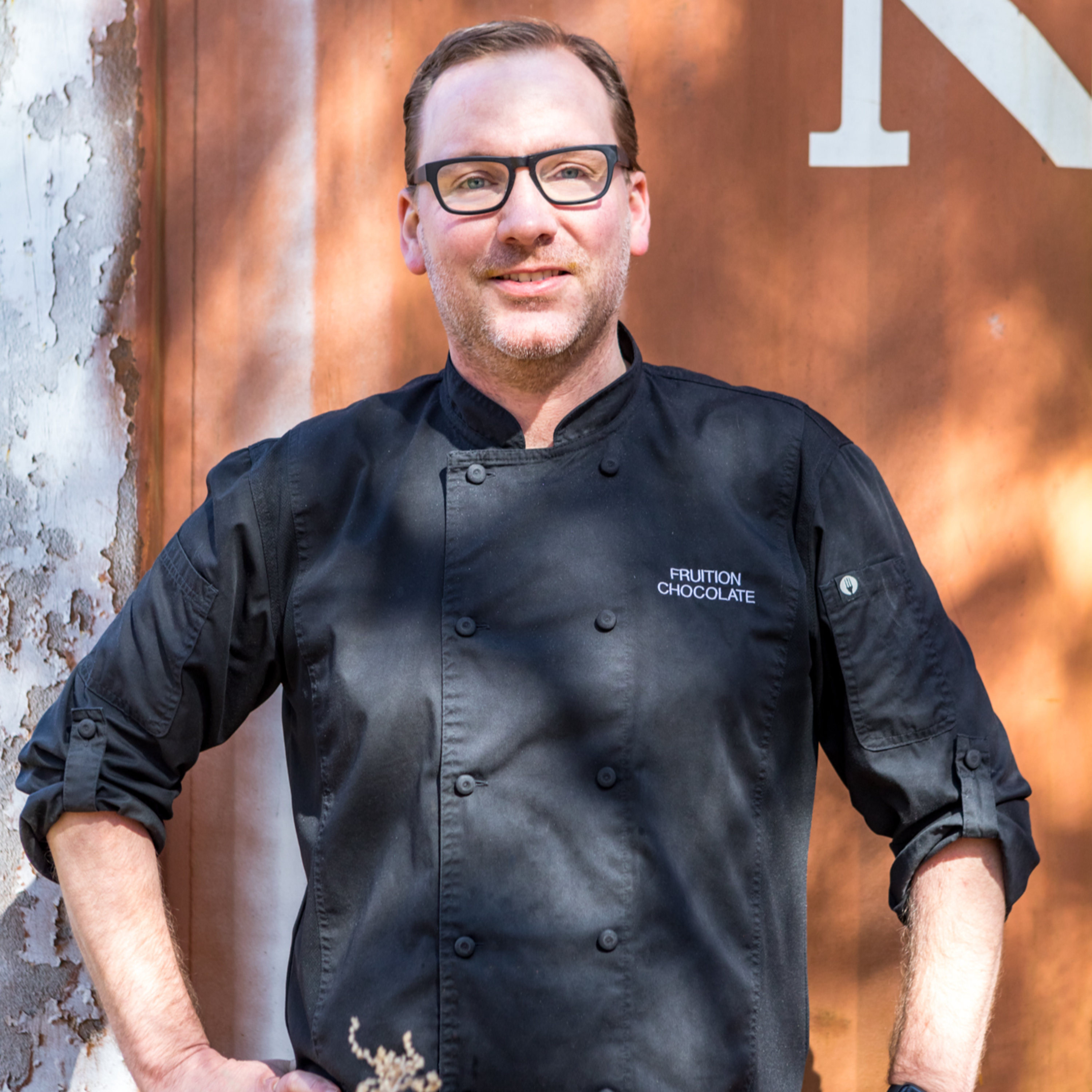
Joining the show is Bryan Graham, the award-winning chocolatier and co-founder of Fruition Chocolate Works.
From his roots in the Catskills to the kitchens of the Culinary Institute of America (CIA), Bryan shares his journey of building a bean-to-bar empire. We talk about the "American craft chocolate movement," why milk chocolate is making a massive comeback, and the surprising truth about where those cacao beans actually come from.
In this episode, you’ll learn:
- The Fruit Factor: Why your favorite chocolate bar actually starts as a tropical fruit seed.
- Local Collaborations: How Fruition incorporates Hudson Valley flavors, from West Wind Orchard raspberries to Tuthilltown Distillery bourbon.
- The Tasting Notes: What to look for in a high-quality bar (and why "cocoa" vs. "cacao" isn't as scary as it sounds).
- Inside the Shop: The scoop on Fruition’s locations in Shokan, Poughkeepsie, and their new pop-up in Cambridge, MA.
Whether you're a dark chocolate purist or a fan of "adult chocolate milk," this episode is a sweet celebration of local craft.
Special Offer for Cidiot Listeners
Fruition Chocolate Works is offering 20% off for the Cidiot community! Use code CIDIOT20 at checkout.
- Shop Online: Fruition Chocolate Works
- In-Person: Visit the retail stores in Shokan (Route 28), Poughkeepsie (Eastdale Village), or the pop-up on 1316 Massachusetts Avenue in Cambridge, MA. (Limit one use per customer. Valid online and in-store. For a limited time.)
Links & Resources:
- Fruition Chocolate Works: fruitionchocolate.com
- Alleyway Ice Cream: Mentioned in the episode for their local collaboration - https://alleywayicecream.com/
- Stockade Tavern: Home of the legendary (and exclusive) Jalapeno Corn Nut snack - https://www.stockadetavern.com/
Enjoyed the episode? Subscribe to Cidiot on Apple Podcasts, Spotify, Pocketcasts, or Goodpods and leave us a review!
Special thanks to guest editor Brett Barry of Silver Hollow Audio, and host of Kaatscast: The Catskills Podcast.
©2026 Mat Zucker Communications. Cidiot® is a registered trademark.
132.2 Chocolate Interview
MAT: Cool. Anything else I should ask you? ,
BRYAN: , You learned that the cacao and chocolate comes from a fruit. I think my job here is done.
MAT: What was such a moron? Does everybody know that?
BRYAN: No. It's becoming more and more a known fact, but like I'm not surprised. At all that, people still don't know 'cause we always just assume, chocolate is this, a flow-wrapped bar that's sitting on a shelf in a gas station or in a supermarket.
Where does it actually come from? It is actually derived from a fruit. It's one of the most fascinating things that I could happily talk about for hours.
MAT: Yeah.
BRYAN: Yeah.
MAT: I’m Mat Zucker, and this is Cidiot: Learning to Live and Love Life in the Hudson Valley. One of the best parts of moving to the country is discovering that local doesn't just mean farm-fresh eggs and kale. It also means world-class indulgence. Today, we're diving into the sweet side of the Hudson Valley with someone who turned a passion for fine dining into an award-winning chocolate empire.
Joining me is Bryan Graham, the chocolatier and co-founder of Fruition Chocolate Works. Based right here in the region with shops in Shokkan and Poughkeepsie, and even a footprint in Cambridge. Brian's taking us behind the wrapper. We're talking about the journey from the kitchen to the cacao bean.
Did I say that right? To dark chocolate milk chocolate. Hot chocolate, iced hot chocolate, and unique collaborations in between. I learned a lot and, like you, left hungry. Grab a bar, settle in, and let's get started.
MAT: [00:00:00] Hi Brian.
BRYAN: Hey, Mat. Thanks so much for having me.
MAT: . I'm so excited to talk about chocolate and get to know you. But maybe first with the, what's your connection to the Hudson Valley? Are you from here? Did you move here like me?
BRYAN: Yeah. No I I grew up here spent a lot of time in the Catskills.
My, my mother's family owned a dairy farm in Andes. Oh, and I used to spend a lot of time there. I grew up in Ville s Samsonville like weird area that like, you can't really find on a map, but
MAT: I don't know where that is.
BRYAN: Town of Olive
MAT: oh, olive. I don
BRYAN: About, 20 minutes from Woodstock.
And yeah it's always been like, it's always been a place that, as I was growing up, like everybody wanted to leave, everybody wanted to get out and find something exciting and maybe in New York City or abroad. And for the most part, I always wound up staying here.
And then as I got older, I like realized this is one of the most beautiful [00:01:00] places in the country and such, such a special place. Through, through an adult perspective, like this is a really amazing place to be and raise a family.
MAT: And did you, so you planned on staying, but did you plan on being a chocolatier?
Did what was the plan?
BRYAN: Yeah. Did you went to
MAT: school here too, right?
BRYAN: I did. I knew that I wanted to work in food. I thought I wanted to be a chef when I was younger. I thought I wanted to work in restaurants. Through a community mentoring program at my high school at, on I was placed at a pla a restaurant called the Bear Cafe in Woodstock.
It had gone through like several iterations, but like at the time in the mid, late nineties it was the fine dining restaurant. It was the place to be. And I just got thrown into it, started working there peeling carrots and whatnot. And then one day there was just like, no, there, there was nothing for me to do in the kitchen.
So the chef said go downstairs [00:02:00] and work with the baker for the day.
And I did. And that kind of changed my entire outlook, my entire life. I fell in love with baking and pastry. I was 16 or 17 at the time, and I started working there after school on weekends and and then eventually just like by default because everybody else had left, I became the pastry chef there.
So it forced me to get really good, really fast. And I loved it. I always had in the back of my mind that I wanted to go to the CIA, the Culinary Institute of America in Hyde Park. And, it's a very expensive school. I, I and my family didn't have the means for me to enroll.
So I just worked. From the time I was 18 when I started working as the pastry chef at the Bear Cafe until my mid twenties. And then at a certain point I was, I said, I've gotta find a way. So I found a way and I went to [00:03:00] school and, with a solid background of baking and pastry I excelled there.
But there was a two week course on chocolate and confections, and I just fell in love with it. Not only did I like decide then that I wanted to be a c chocolatier I wanted to dive deeper into the process. Like, how is chocolate made? How, like where does this thing that we just buy off the shelf where does it come from?
How is it made? So I got like into that rabbit hole.
MAT: Wait, how is it made?
BRYAN: Yeah,
MAT: to jump on that, by the way.
BRYAN: Yeah.
MAT: You don't just buy it on a shelf.
BRYAN: No. Odd. Oddly enough,
MAT: the
BRYAN: chocolate
MAT: tree there. Tree.
BRYAN: Yeah. So it's the sort of rule of thumb is that. 20 degrees above or below the equator.
It's a tree that grows in the tropics. It's a beautiful fruit tree. The fruit itself is it could be like the size of,
MAT: it's a fruit tree.
BRYAN: Yeah. Yeah. I didn't know that. Yeah. Cacao grows on trees and [00:04:00] it's a fruit. And the seeds, the things that we call cocoa beans are. The seeds of that fruit.
So actually I have here's what I mean.
MAT: You're showing me
BRYAN: one audio listeners won't be able to hear, but here's a little basically Lifesize cacao pod. So inside of these fruits, there's this sort of like white sweet, delicious, sticky pulp. That surrounds about 40 or 60 seeds, and those seeds are harvested.
They're usually brought to a centralized fermentation facility. They're fermented, which kind of begins the process of what we know as chocolate flavor. And then they're dried usually in open air in the sun. And then they get bagged up and shipped to chocolate makers like us.
MAT: And are there different, when you get into, white chocolate, dark chocolate, different kinds of [00:05:00] chocolate, is it a different seeds for those things or that's later in the process? It's not like wine for grapes.
BRYAN: Yeah, one, one really interesting parallel is wine and grapes and varietals and and processing and harvesting.
So, depending on the country of origin, the place within that country how, like the genetics of the cacao itself, and then how it's harvested and processed. All of that happens before these cocoa beans even get to me. So it's a really phenomenal thing, a lot of like mass-produced chocolate that we're familiar with is meant to taste the same all the time.
Pick up a, fill-in-the-blank, like an industrial chocolate maker, chocolate bar from the gas station or whatever. Like it's gonna taste basically the same today as it will next year and the following year and the following year. They're trying to standardize it, whereas what we are trying to do is, really highlight the differences between year harvest batch.
So even though. It's gonna mostly taste the same year to year batch to batch. De depending on the climate, depending on rainfall, depending on, temperature, heat, like, all those are all gonna have effects on the flavor of that cacao. So we try to like, showcase that.
MAT: We'll get into Fruition in a second, your business. But I'm a snob, so if I wanna look at what's good, what do I look for?
BRYAN: Look for somebody who is really proud and open about their sourcing practices, where their cacao is coming from.
Who grew it, I a lot of the cacao that we use back, like we know exactly the cooperative or the farm or some of the farmers themselves. Cacao in general, is a commodity crop. A lot of it, 70-something percent of the world's cacao is grown in West Africa.
And you don't really know much about the providence of that cacao. We like really pride ourselves on knowing exactly where it's grown, who grew it and if we haven't personally been there we work with transparent trade companies that like, that know all of this stuff that can, that, that do the legwork.
So any chocolate maker or any chocolatier worth their salt would be really proud to tell you exactly where they're getting their chocolate or where they're getting their cacao, if they're making chocolate from bean to bar.
MAT: So what about Fruition? Like, how did you start your own brand?
BRYAN: We've been doing it for a little over 15 years now. I knew that I wanted to be a c chocolatier. That was what I realized in culinary school was, even though I had a lot of good experience in other parts of the baking and pastry and culinary world there was something about chocolate that just really jumped out at me.
And I thought okay, I'm gonna be a C chocolatier, so I'm gonna [00:08:00] make beautiful bon bonds and confections and things. And then, as I usually do with other pursuits, I jumped down the rabbit hole and I wanted to find out more about how chocolate was actually made.
So I decided that, okay, I'm gonna be a C chocolatier. What could be my angle, what could be unique about what we do. Yeah.
And I thought maybe we'll just learn how to make our own chocolate. At the time there was this like, it was the early stages of the American craft chocolate movement.
When we started there were maybe. 15 or 20 companies in the US that were actually like importing, cacao, turning it into chocolate. So we were among that sort of first wave maybe second wave of companies that were doing that. And that's what I initially thought, would make our brand unique.
And. It spiraled from there. And, we went into it. When I say we, I mean myself and my [00:09:00] wife, Dalia who's co-founder. We didn't really know what we were doing. Had some good ideas, had no money started out incredibly small like really bootstrapped it. The help of, our families and stuff.
And it, it caught on. It was like a really, it was a really beautiful process in the early days. Difficult but really nice.
MAT: And how does being rooted in the Hudson Valley shape it? Is there something Hudson Valley ish about it, besides, obviously you went to CIA here and
BRYAN: you're
MAT: here.
BRYAN: It's tricky being a food company, a food manufacturer in the Hudson Valley when your main ingredients come from thousands of miles away. So it was really important to us to try to find ways that we could, instill a sense of place. Like I'm from here. My wife is from here, our families are here. So how could we take something that we're [00:10:00] doing that's like a, a high-end, a chocolate company and tie it to our roots, tie it to the Hudson Valley? We work with a lot of local farms for inclusions for our chocolate bars and bon bonds distilleries, breweries.
So even though the majority of the raw ingredient comes from, certainly not the Hudson Valley, the Catskills we try to do a lot of collaborations with with companies near us.
MAT: Okay, so let's talk about your product line or the types of chocolate. Explain to a cidiot what are the categories, like, how should I think about it? And of course, what's your favorite?
Which I know you don't have, I'm
BRYAN: sure. Yeah. No I don't have a favorite because I'm the one that's usually developing every new product, so at the time that I'm like working on something like that's the favorite, like that's the one that caught my attention.
MAT: Oh, okay. Yeah. Tell me about some crazy innovations as well. Yeah.
BRYAN: Early on in the, , when we were getting started, the trend in like American craft chocolate was high percentage [00:11:00] to ingredient dark chocolate. So meaning like really showcasing the terroir, the flavor of a particular cacao.
And it was almost heresy to to add additional cocoa butter or vanilla or. Make a milk chocolate or, God forbid, make a white chocolate or something. Coming from my perspective was as a chef, as a creative person, like that made no sense to me. , Why would you wanna limit yourself to just something like very strict and very straightforward when a lot of your, a lot of your customers may not appreciate that. They may want something that's, nostalgic for somebody like me who grew up eating like, Hershey's bars or like crunch bars or Snickers or whatever I looked at it as, how could we make the best version of if we're gonna make milk chocolate, we're gonna make the best version of milk chocolate possible.
If we're gonna make our version of [00:12:00] a, a sort of Snickers bar, we're gonna make the best version possible. And because we're creating all of our base ingredients to make these confections, I didn't want to limit ourselves to making just high percentage dark chocolates. So we make everything from our version of a white chocolate all the way up to a 100% dark.
The entire gamut. And there, there's everything in between. Milk chocolates, inclusion bars, dark milk, like on the edge, what's
MAT: an inclusion bar?
BRYAN: Just anything that has any chocolate bar that has an additional flavor or filling. We'll maybe put passion fruit freeze dried passion, fruit puree and pop rocks. And that's an inclusion bar. So
MAT: Pop rocks super
BRYAN: fun. Yeah, super fun.
MAT: Do you do anything like kit Kat? My husband Brian loves Kit Kats and when he, like, when he goes to Japan, he picks up like, hello Kitty green flavored Kit [00:13:00] Kats.
BRYAN: We don't do a Kit Kat Ty Bar but we make like our versions of classic chocolate bars or candy bars that, that you
MAT: Oh,
BRYAN: You might've heard of. I'm so happy you said that because we're stuck with just our regular old kit Kats. Japan has all the fun ones.
MAT: Is there any Hudson Valley special flavors or things?
BRYAN: Yeah. We work with a farm called West Wind Orchard in Accord. We do a series of chocolate bars with them. It's a collaboration bar.
. So some of their beautiful fresh organic raspberries , we'll take them, freeze, dry them, and add that to to a dark chocolate. We do a pumpkin spice milk chocolate using pumpkins that they grew a chili. Chocolate bar with with chilies that they've grown.
That's
BRYAN: cool. Yeah. When, . We try to find companies. There's Tuttle Town Distillery. We we work with them quite closely. We've made a bourbon infused dark chocolate milk chocolate bar. One of our bestselling Bon bons is a, it's [00:14:00] a brown butter and bourbon caramel. Made with
MAT: Yum.
BRYAN: Made with, yeah. Made with their bourbon. And
MAT: maybe we could do a Cidiot bar, like a city at collab. It'd be like, I don't know, the newcomer to chocolate or like for the naive, or it could be yeah, with goat milk.
I don't know, like what could, I don't know what would be in it.
BRYAN: Yeah. Let's do it. Let's find a way to make that happen. I'm open to ideas
MAT: And what, so what about the name fruition? I love that it's called Fruition Chocolate Works. 'cause it makes me think of Willy Wonka.
I don't know if you know him.
BRYAN: Yeah. I'm sitting at a table right now and I'm looking at the limited edition Willy Wonka Lego Set. Oh, cool. That, that I bought my daughter for Christmas. But really I bought it for myself. Yeah. Yeah,
MAT: so the name Fruition, where did that come from?
BRYAN: It was one of the, it was one of the harder things to come up with, like when we were getting started I had, my wife and I had the idea to start this business and we, we [00:15:00] both left our jobs. She was a teacher in New York City, and I was I was working as a sous chef at the CIA at the Culinary Institute.
We knew we wanted to , branch out and do something on our own. So we, we quit our jobs and we just took six months off and went on a road trip. Across the country and spent some time in Samoa and then New Zealand just backpacking, just trying to figure out like where we wanted to settle down and start what would ultimately become fruition.
And the name itself, I think we were just walking on a beach somewhere on the nor on the coast of Oregon. And it just made sense. 'Cause we were like just walking around, like throwing out names, trying to figure it out. And then fruition popped into my head, and this is the definition of fruition is like, coming to fruition.
It's like the realization of a dream. It's so we were trying to. We were scheming and trying to figure out like how to start this [00:16:00] business and so like finally like it's coming to fruition, but then also literally it means fruition is bearing fruit.
And the idea of,
MAT: and it's a
BRYAN: fruit pick out. Yes. Yeah.
MAT: Which I didn't know until today,
BRYAN: So that was a nice secondary meaning. It's also just a beautiful word, I think.
MAT: Yeah. Now connects much better for me. And you distribute a lot of places all over, but you have two locations in show Sook can and there's a, and there's a new one. There's a new one. And they have chocolate bars. So
BRYAN: We distribute to about 350 stores nationwide. A few international places, primarily focused , on the U.S.. We've always had a retail store and cafe attached to our factory in Shokan.
Which is great. We're right, on Route 28. So people heading up to the Catskills for the weekend or like skiing. We're the best place to, to stop and get a hot chocolate or a little, [00:17:00] coffee or a snack or something. And then we recently opened a satellite retail store in Poughkeepsie, in Eastdale Village.
And that's only a few months old, but it's off to a great start. So we're gonna see how that goes. We also are running a popup in Cambridge, Massachusetts, which is our. First foray , out of state. And that's all also off to a good start. We'll see how it goes.
MAT: How'd you choose boston.
BRYAN: It was interesting a friend of ours knows the owner of the store called Levit and Pierce. It's on Mass Avenue in Cambridge. And put us in touch with them. They were looking for something to fill up a small space within their store and they, they really wanted a chocolate shop and they really wanted us.
And then we decided it was a good fit. So we're giving a shot. It's it's been there for a few months now. It's going well. It's in a, an incredibly busy part of Cambridge, yeah we're just like seeing how things go
MAT: and how'd you decide to [00:18:00] do, I guess it makes sense why you did the show.
Can location, how'd you decide to do a second retail location?
BRYAN: We'd been playing around with the idea of having more satellite retail stores. We had, we did have a store in the town of Woodstock, right in the center of town for a few years. We decided to close it up in 2020, right after COVID hit and shut everything down. So we had a successful story there. But we wanted to see, it increase our presence in other places. East El Village in Poughkeepsie is like a really, it's a really beautiful community.
It's, there's some great restaurants and shops and there's a bunch of apartments and condos and all, built in clientele, like built in customers. So we decided to open up a small, like very small 450 square feet cafe, so we can do our hot chocolates and our mochas and like a very chocolate focused cafe.
Plus all of our [00:19:00] regular products and bon bons and stuff. And also we're featuring. A big wall of other people's chocolates. So friends of ours in the chocolate industry. So we have probably one of the best selections of chocolate, in the country, like in, in this little store.
All kinds of stuff from from other chocolate makers around the world. Oh,
MAT: that's cool. So you don't really think of the other things as competition necessarily?
BRYAN: No. No. It's a, it's a beautiful thing. Like most of my closest friends are other chocolate makers. My competition,
MAT: that's funny. Yeah I connect with a lot of other podcasters. I know this is a totally different thing, but, and some of them are really surprised that I reach out and I want to go on each other's shows or become friends and collaborate. 'cause I don't really see it as competition,
BRYAN: yeah. No it's the it's that idea , a rising tide lifts all boats we we, it's, it even though the craft chocolate movement's been around for a while now we're, it's nice to have a sounding board [00:20:00] for, ev every problem, every challenge that we that we're faced with I know somebody else has gone through this or something like, possibly even worse. So I've got a couple of my friends on, on speed dial just to check in with a, about the challenges of a running a business and b, running like a specialty food, craft chocolate business.
MAT: And what would you say is the bestseller, ? What do people really demand and what's like the worst sell? Something un underestimated, you can't believe people are not enjoying this other thing. What's your bestseller and your worst seller?
BRYAN: The surprising thing is that we're selling way more milk chocolate than we are dark.
I, I think that was as, as I said before, the trend had been, people focusing on like really high percentage, super dark, minimal sweetness chocolate bars which is great. And it's a nice and noble thing to, to manufacture, a lot of people just want a really [00:21:00] comforting.
Satisfying milk chocolate bar. Our milk chocolate bars and our higher percentage dark milk chocolate bars outsell, pretty much everything else. So our bestseller is we call it a brown butter milk chocolate. It's a 43% milk chocolate, meaning there's 43% cocoa nibs plus cocoa butter.
And it's a sweet, milky, enjoyable, but you can still taste the, the flavor of the cacao. And it's just a total crowd pleaser. Worst sellers are usually, like when we try to get a little bit creative, we've had to discontinue a few a few products.
One of my favorites early on was dark Chocolate and Jalapeno dusted corn Nut. So a fried, fried a fried corn kernel. So it's crunchy, salty and then a little bit of dark chocolate [00:22:00] and jalapeno powder. We developed a initially with with Stockade Tavern on Fair Street in Kingston, as meant to be a bar snack.
So something that is, like hits all of those notes, right? It's like sweet, salty, spicy, crunchy and delicious. And we still only, we make those only for them now. Because. Nobody wants to buy them. I think it's one of the most delicious things we've ever made, but customers just don't seem to resonate with it.
MAT: Okay, so listeners, if you're into this, you gotta go to the bar.
BRYAN: You got you. You have to go to Stockade. Yeah,
MAT: you gotta go to stockade. Oh, we're definitely gonna do it. A city at Bar. And the milk is the milk from the Hudson Valley?
BRYAN: No the milk is it's from Michigan.
There, there are very few milk powder producers. I would love to have it, all local milk, but there's nobody in this area. That's making great milk and then turning it into powder, which is the format that we have to use for chocolate.
MAT: So if I [00:23:00] come to a store and. It's like spring. It's warmer weather, so I'm not really up for hot chocolate right now. What do you think I should buy? I can't have nuts, but now I can have fruits. I just was able to start eating fruits, so listeners will not believe this is breaking news. Oh, wow.
So I'm really excited. I could probably try the passion fruit thing. But what would you have me try? I can't do nuts, but I can do anything else
BRYAN: One cool thing about going into our stores is you can taste everything. We have samples out of every product we make. But if you were gonna try something I would really, we're just passing hot chocolate season, but you could get an iced hot chocolate, which would just be really like a super intense ice, chocolate kind of chocolate milk, like an adult chocolate milk.
MAT: Ooh, I like that idea.
BRYAN: Yeah. I would do that and I would probably throw a shot of espresso in there too, to make like a super intense mocha. We're also, the other thing you could definitely try though [00:24:00] is we're serving ice cream.
Over the summer and in my opinion, the best ice cream producer in the region is alleyway Ice Cream and Siess. Yes. I know that. We've been friends with Julian, the owner and ice cream maker for years now, and I've always wanted to serve his ice cream.
And I've always wanted to find a way to work with him. But he was like, still, too small. Trying to figure out like logistics this year though we haven't even really promoted it yet, but but we're we've collaborated on a chocolate ice cream that he made and it is phenomenal.
So that's definitely a thing that you should come by and try too.
MAT: That's amazing. And then when, wine language has all these adjectives one should use to describe and these bizarre adjectives in adverbs. Yeah. What are chocolate words? What are the, what's the language of chocolate?
BRYAN: It's surprisingly similar to wine language tasting [00:25:00] notes. And I try to leave it up to everyone's interpretation. There are certain things that we say specifically on the package. So the relative sweetness of something, so the percentage of cacao in a chocolate bar. But beyond that, like I can give you some like very broad flavor notes of, a particular cacao or a particular region or the processing that like will be a standout. I try not to , push it down people's throats. Here's what you're tasting. I want everybody to to experience it like their own way. So I almost I try to shy away from tasting notes and all of that language.
MAT: It could sound a little bougie or douchey, even though I can't even say cacao. Wait, I just said it. I just said it. That's great.
BRYAN: That was perfect. Yeah, sounded great. Cacao.
MAT: It's a silly sounding word in a way.
BRYAN: Yeah, it is. You can also say cocoa. They're interchangeable.
MAT: Oh, I can, I was afraid to say cocoa.
I can say cocoa.
BRYAN: Absolutely.
MAT: That's not like too down market to say cocoa.
BRYAN: Nope.
MAT: Ca cow sounds fancier. Okay.
BRYAN: The cow [00:26:00] sounds, yeah.
MAT: It sounds very Rhinebeck.
You spoke earlier about your love of the Hudson Valley. I usually ask guests their favorite spot, where they go to be inspired for new crazy flavors or things like that. Like where do you go? What's your favorite spot?
BRYAN: I don't get out very much because I'm a dad of a 9-year-old girl. So a lot of my my free time is is finding fun things that resonate with with a young daughter. On the rare chances that we get out I find a lot of inspiration and it's not gonna be food related.
But I live in Woodstock and right around us are so many incredible and historic places to go and hear live music. My wife and I spend a lot of time the chances that we can get to get out at Levon Helm's Barn. At the Bearsville Theater, at the Colony to go and to just go and see [00:27:00] live music.
It's such a beautiful thing. And it's right in our backyard. I can be a, a world class music venue in five minutes if I hop in my car. So I find a lot of inspiration. Again, not food related, but I, I think music can really tie beautifully into into the whole ethos of making a good food product.
, Making chocolate.
MAT: , I guess like chocolate. It can touch your soul.
BRYAN: Yeah. Absolutely.
MAT: . Anything else I should ask you? ,
BRYAN: , You learned that the cacao and chocolate comes from a fruit. I think my job here is done.
MAT: What was such a moron? Does everybody know that?
BRYAN: No. It's becoming more and more a known fact, but I'm not surprised that people still don't know 'cause we always just assume, chocolate is this, flow wrapped bar that's sitting on a shelf in a gas station or in a supermarket.
Where does it actually come from? It actually is derived from from a fruit. It's one of the most fascinating things that like I could happily talk about, like for hours. [00:28:00]
MAT: Yeah.
BRYAN: Yeah. And I'm dare I say an expert on the chocolate making side of things, but there's this whole other world of people, farmers and scientists who are, finding interesting and creative ways of of processing that cacao, which is a whole like separate, world from what Fruition does.
MAT: Thanks for listening to Cidiot. You can tell I love chocolate. Fruition Chocolate Works has a special 20% off offer for Cidiot listeners, which could be inspiring for gifts for Mother's Day, father's Day, or anytime.
Get 20% off when you shop their website or in person at their two stores on Route 28 in Shokan and on Eastville Avenue in Eastdale Village, Poughkeepsie. There's also a popup on Mass Ave in Cambridge, Massachusetts. If you're listening from there, just use Code City at 20.
For me, I'm into the Hudson Bourbon Dark Milk Chocolate Bar, but I'm kind of tempted to try passion fruit caramels, especially now that I can eat fruits. If you're indecisive or paralyzed by choice, you can also do a gift card. That's Cidiot 20 for 20% off online or in store limit to one use per customer. Check the episode page for a link and more details. Yum.