133. Walking Olana

 Apple Podcasts
 Spotify
 PocketCasts
 Goodpods
 YouTube
 Castbox
 Castro
 iHeartRadio
 Amazon Music
 Podcast Addict
 Audacy
 Pandora
 RSS Feed
 PlayerFM
 Just in time for Frederic Church’s 200th birthday, we’re taking you along for a "boots on" tour of the moving landscape he spent decades designing here in the Hudson Valley.
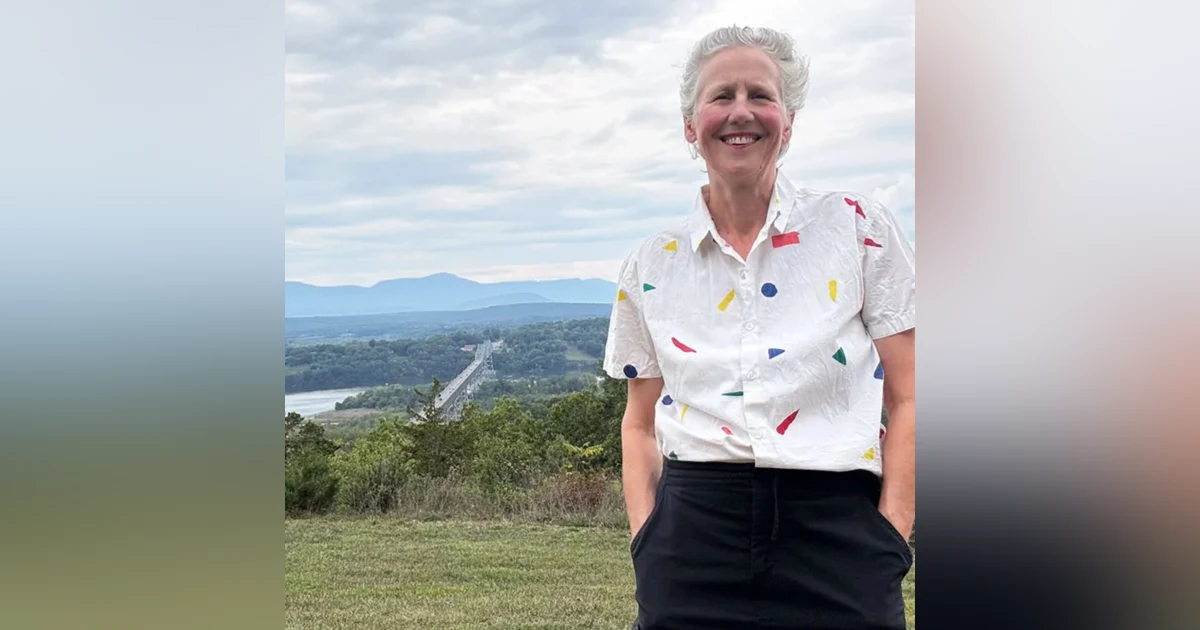
I’m walking the carriage roads of the Olana Historic Site with Annik LaFarge, author of the new book Composing Olana: A Journey on Foot Through Frederic Church's Greatest Work of Art. It’s the first book about this thoughtful and artful landscape.
You’ll hear the wind in the trees and the crunch of the gravel as we discover how Church used the earth itself as his canvas—from a man-made lake that mirrors the Hudson to the "erratic" boulders left behind by glaciers. Walking Olana, you’ll hear, is like "standing inside a painting." It’s an episode about seeing the hidden layers of the valley we love, sponsored by our friends at the Olana Partnership.
We’ll learn a ton about Olana and about Frederic Church, who wasn’t necessarily a weekender but just might have been a cidiot. Annik and I also came up with a new sitcom idea: “Cole & Church.”
Grab your walking shoes, let’s head outside.
Links to Highlights:
- Olana Partnership Frederic Church 200th: (OLANA.org/FC200)
- Composing Olana: A Journey On Foot Through Frederic Church’s Greatest Work of Art (Cidiot Bookshop on Bookshop dot org)
- Germantown Boat Launch
- Catskill Mountain House
“He used features of the landscape as his characters.”
—Annik LaFarge on Frederic Church
Thank you to The Olana Partnership for supporting this episode and guest editor Brett Barry of Silver Hollow Audio and host of Kaatcast: The Catskills Podcast. Come visit.
©2026 Mat Zucker Communications/MCZ Media LLC. Cidiot® is a registered trademark.
Walking Olana - Full Episode Transcript
Annik: [00:00:00] He never considered a painting finished until he had worked on it both in the city and in the country. So he would take his unfinished paintings and bring them up here to his studio, which was his first studio, which was just up on the, we're looking at the spot.
Mat: Wait, was he a weekender? I don't
Annik: think you would call him a weekender.
But he did have a great friend, William Osborne, who was the, he was a railroad man, and he was the head of, I think the, like the Illinois Central Railroad, I think. And he had a private rail car, and he took Church up and down the Hudson River on the old Hudson River Railroad in his private railro- rail car.
So I wouldn't call him a weekender, but he was, and maybe he was a cidiot. You know, you might- Yeah, yeah ... be
Mat: able
Annik: to make a, a
Mat: case. He was p- well, he was discovering nature. He was learning. He was actively learning. I think a good cidiot is acclimates to the environment and really takes advantage of it and learns about it, and you get the bad name when you don't.
Uh-huh. It's a pejorative when you're not, when you're hiding in your cabin. But if you're actively engaging with nature and the world around [00:01:00] you, then you're a good cidiot.
Annik: Yes. Right. Okay. I think he was a good cidiot.
Mat: I'm Mat Zucker, and this is Cidiot: Learning to Live and Love Life in the Hudson Valley. Most people know Frederic Church as a world famous painter, but my guest today says we really should think of him also as a placemaker. I'm walking the carriage roads of the Olana Historic Site with Annik Laforge, author of the new book, Composing Olana: A Journey on Foot Through Frederic Church's Greatest Work of Art.
Just in time for Church's 200th birthday, we're taking you along for a boots-on tour of the landscape he spent decades designing. You'll hear the wind in the trees, the crunch of the gravel, as we discover how Church used the earth itself as his canvas. From a manmade lake that mirrors the Hudson, to the erratic boulders left behind by glaciers.
Walking Olana, you'll hear, is like standing inside a painting. It's an episode about [00:02:00] seeing the hidden layers of the valley we love, sponsored by our friends of the Olana Partnership. Grab your walking shoes and let's head outside.
Music: Down in the valley, moved up from the city. It's a new way of living and I'm trying to get used to it. One park, two loops, half an ounce of an idiot. Ordered a Manhattan and they called me a cidiot. At first it hurt my feelings, but it's kinda gotta ring to it. When you move to the country they can tell when you're new to it.
I'm looking out of place, but I'm trying to keep fitting in. It takes too long to be a local so for now I'm a cidiot.
Mat: All right, I'm here with Annik LaForge, author of Composing Olana: A Journey on Foot Through Frederic Church's Greatest Work of Art. I'm in a [00:03:00] painting.
Annik: You are in a painting, and we are on foot.
Mat: We are on foot.
Annik: Although we could be in that carriage over there that we see, which is called Kaye's Carriage, named after one of the Olana trustees. Fun. And that carriage is white, that, that electric- It's like a golf
Mat: cart.
Annik: Yeah, it's like a golf cart. It's an electric vehicle. It's white because in the time of Frederic Church when he built all these carriage roads, he had imported special donkeys from Syria.
I love
Mat: donkeys.
Annik: And, and these were beautiful animals, and they were, they were snow white. And they would take his visitors in donkey carts throughout the landscape. And so when they started doing the electric vehicle tours, which are absolutely wonderful, and you have not seen Olana really, you haven't experienced Olana if you have not taken one of these tours.
Because-
Mat: Oh, I'll do it. I just thought it was like a, it'd be a lazy way out.
Annik: No, it's not. But now I wanna do it. And I thought that too for all those years, and then I did it for the first time with Mark Porzorski, the landscape curator here, and I was gobsmacked because Frederic Church designed this place to be seen [00:04:00] in motion.
Mat: Oh.
Annik: Almost like, you know, in the 19th century there was this craze for panoramas. They were long, long paintings. I have a s- a thing in my book about this. And they were, they would scroll by, and people would sit in the theater, and the painting would scroll by. The, the, the one that I write about in the book is of a very famous whaling expedition.
Mat: Oh.
Annik: So you see these ships tossing in the waves, and you see whales and whatnot. And that idea of the sort of the moving landscape was partly what inspired Church. So the idea that you would be moving along through these carriage roads, getting periodic glimpses of the house... This is, we're now standing at this-
Mat: We're pretty far from the house.
We're way down the hill. It's a gorgeous view.
Annik: Yep. And it's a windy day. The lake here that Frederic Church built.
Mat: He built the
Annik: lake? It took him 10 years. It was interesting. I found this out through, I think, Victoria Johnson's book, that he sent his farm manager down to New York City to Castle Garden, which was the precursor to Ellis Island, and he [00:05:00] brought up something like, I don't know, 17 immigrants to help him dig this lake.
It took 10 years. And he designs the lake. If you go up there onto the road right below the house and you look out over the Hudson River, you see that the design of the lake, the shape of it, it mirrors the bend in the river just to the south of us here. So even the lake itself became part of the work of art.
Mat: Incredible.
Annik: When we talk about Olana being a great work of art, this is one example. He wasn't just digging a big hole and filling it with water. He was making an earthwork, really.
Mat: How did he choose here? Like, why here?
Annik: Well, because he came here to study with Thomas Cole, who was the, you know, a famous-
Mat: Oh, Cole was here first.
Annik: Oh, yeah. Cole was here first, and when Church was 18, he came to Catskill, and he boarded with the Cole family, and he wanted to take lessons from Thomas Cole.
Mat: I didn't realize he was here first. Yeah. For listeners, Thomas Cole is another famous painter who lives across the street, across the river, in Catskill, and you can actually...
There's a walkway you can take from one to the other now.
Annik: That's [00:06:00] right. They built the walkway over the Hudson, they call it the Art Trail, to connect these two important homes. And Thomas Cole taught Frederic Church an enormous amount about painting, but what he also taught him was about observation, the art of observation.
And about going into the landscape and studying all the details of the geology, and the plants, and the lay of the land, and the colors, and the clouds, and the rivers, and the reflections. And he would label his sketches with numbers and words, and that's something that Cole taught him, too. So Church was just this extravagantly meticulous, observant guy.
And this is, this is one of his, I... We call them composed views. I believe that's a, a Chinese term. And this is one of the places where Church wanted you to get a sense of the house. On a nice calm day, you see the reflection [00:07:00] of the house in the lake. That's amazing. Which is very beautiful and romantic. I never
Mat: noticed that before.
Annik: And then if we turn around here and we look down the hill, this is the Frederic Church Center for Art and Landscape that just opened a year or so ago. And what's really amazing about this building is that it just kinda disappears. You don't really see it. And- I
Mat: didn't even know it was here. I come to Olana all the time.
Annik: They did this on purpose, and they did it in the spirit of Frederic Church, who didn't make his house the main event. He made it a surprise so that his carriage roads would wind around, and you would catch a view of it, and it would disappear through trees or through a giant hill or something, and then you would see it again.
Mat: So the carriage house was all the way down here?
Annik: The carriage roads.
Mat: Oh, the carriage roads. I'm sorry. Yeah, yeah. Yeah,
Annik: yeah. So this is
Mat: one of the- Yeah, this upstate thing with these long driveways drives me crazy. I'm always getting stuck. I bet they got stuck all the time.
Annik: They probably did, yeah. But they had all those great donkeys and horses to pull them.
And
Mat: they
Annik: had a lot of strong people, I think.[00:08:00]
Mat: So are you the first person to really appreciate the, the landsc- like everyone talks about, you know, him and, and the paintings, and the house, but here you are focused on what you call the, the, the greatest work of art, which is actually the place.
Annik: Well, I'm not the first person to make this observation. Um, I, this is the f- But you're the
Mat: best.
Annik: Thank you. My Composing Olana is the first book to focus on the landscape primarily, and this is what I do. I write about landscape. I'm interested in, in the layers of history in a landscape. So my first book was about the High Line.
Mat: Yeah, we used to live on the High Line.
Annik: Yeah, I know, and you were a writer for Chelsea Now.
I
Mat: was.
Annik: Which is a paper that I read. You used to be in one of those little boxes on the street corner. I know. Do you
Mat: remember? I loved that. I know. It was so cool.
Annik: This book grew out of that interest. So this is something that your audience will probably relate to, is that there is, I think, this impulse in many of us to have a foot in both the city and the country, and this is something that Frederic [00:09:00] Church also shared.
Mat: Oh.
Annik: He had a studio in New York City on 10th Street called the 10th Street Studio, and it was the first building in the country to be devoted to artists, specifically to artists.
Mat: Cool.
Annik: And my great-great-grandfather also had a studio at the same time. They knew each other. Oh. Which, so I feel a sort of a little bit of a connection
Mat: there.
Your great-great-grandfather was an artist?
Annik: Yeah. Oh. He was John LaFarge, who was the inventor of painting on opalescent glass, and the reason that you know you have a Tiffany lamp perhaps in your house is because John LaFarge was a really crappy businessman, and- ... Tiffany basically stole his invention- Ah
Music: and made a great name for himself.
Annik: The 10th Street Studio was a place where Church would... He, he never considered a painting finished until he had worked on it both in the city and in the country. So he would take his sc- uh, his unfinished paintings and bring them up here to his studio, which was his first studio, which was just up [00:10:00] on...
And we were looking at the spot.
Mat: Wait, was he a weekender?
Annik: I don't think you would call him a weekender.
Mat: But
Annik: he did have a great friend, William Osborne, who was the... He was a railroad man, and he was the head of I think the, like the Illinois Central Railroad, I think, and he was very involved with McClellan during the Civil War and, and dealing with railroad, you know, train issues with troops and stuff.
And he had a private railcar, and he took Church up and down the Hudson River on the old Hudson River Railroad in his private railroad railcar. So I wouldn't call him a weekender, but he was A- and maybe he was a cidiot. You know, you might- Yeah, yeah ... be able to make a, a case.
Mat: He was, well, he was discovering nature.
He was learning. He was actively learning. I think a good cidiot is, acclimates to the environment, and really takes advantage of it, and learns about it. And you get the bad name when you don't. Uh-huh. It's a pejorative when you're not- Right ... when you're hiding in your cabin. But if you're actively engaging with nature and the world around you, then you're a good cidiot.
Annik: Yes. Right. Okay. I think [00:11:00] he was a good cidiot. He was also a great advocate of parks. Most people don't know this about Frederic Church, he was a commissioner of Central Park for, I think, five years in the- Yep ... 1870s. But he was also the force behind the creation of the park, the reserve at Niagara Falls.
He's credited with basically the saving of Niagara Falls.
Mat: Wow. When did he get all this done?
Annik: Well, he knew everybody. He was very famous and very wealthy. I think he was enormously well-liked. He was a wonderful character. He had a great sense of humor. And I think he was so respected. I mean, Frederick Law Olmsted, one of the co-creators of Central Park-
Mat: Yep
Annik: basically brought Church into the process of designing Central Park because he wanted the artistic vision that Church had. He felt that that was necessary in the creation of Central Park. And of course, Calvert Vaux, the other co-founder of Central Park, was [00:12:00] one of Church's... He wasn't the architect of Olana because Church designed the house, but Vaux was an architect, so he could deal with things like massing and, you know, the sort of, creating the kinds of plans that you have to make when you're building a house.
So Vaux was very involved, but I think Vaux's greatest contribution was the siting of the house. That's what he was very, very interested, very preoccupied with place, and the proper siting of features in a landscape.
Mat: Yeah, so this house is, I mean, it's up, it's on the bend of the river, right? It's up, up on the- So this all seems very intentional.
Annik: Yeah. Well, it's up on this big hill, and it looks out over on the bend of the river. And he situated the house so that it would be, that part of the river would be really the main view. But, but you see everything th- 360 degree views from the top of the, of the hill, which is sometimes called Long Hill, and sometimes called Church Hill, and originally called Siegenthal Hill.
I think that's how you pronounce it.
Mat: Is it, was it that common for a painter [00:13:00] to be this involved in landscape design and gra- I just don't think of painters that way. I think of them- No ... so focused on the painting, I don't give them the credit to have this many other talents, or be this involved in that many other things.
Annik: No, I think Church was doing something that hadn't been done before. He bought this, this land in, he first, the first piece of Olana he buys in around 1859, 1860. And he bought it with the money that he made selling The Heart of the Andes, the very famous painting that went on tour like a rock band. And he started building these carriage roads- And he was using his landscape as its own work of art.
He began to treat the landscape, to regard the landscape as a work of art. And this was something that was really very new. When I think about what Church's legacy is, I, I don't think so much of him as, I mean, ob- obviously he has a very powerful legacy as a landscape painter. But to me, [00:14:00] he's the ancestor of Robert Hammond and Joshua David.
Mat: Oh.
Annik: He's the ancestor of the creators of the Bloomingdale, the 606 park in Chicago, of the Atlanta Beltway. I, I think of Church, to me, he's a place maker. He's somebody who takes the landscape and uses it to tell a story. Um, to create an experience that will be unlike any other experience that you've ever had.
Mat: How did you choose this as your next book after The High Line? Do you live here, too?
Annik: Well, I live here now full time. I bought my first house in 1985, in Germantown. We eventually let our loft go on 22nd Street, and settled here full time. And walking here every day made me think, "You know what? I know a lot about the stories of this place.
I know a lot about the history of the landscape, the geology, the story of the friendship of Thomas Cole [00:15:00] and Frederic Church." And I thought, "You know what? I did this for The High Line. Why not do the same thing for Olana? Why not unpack everything that you see and what you don't see, and organize it as a series of walks along these carriage roads?"
I did a book in between. I wrote a book about Frederic Chopin.
Mat: Oh.
Annik: Um, so that came in the middle of the...
Mat: Cole and Church would make a great sitcom.
Annik: Yeah. Oh.
Mat: So what's something else that I don't see, that I'm not, that I should see?
Annik: Well, let's
Mat: see. The, you pointed out the views, that some things are intentional.
I didn't think about the lake, that it kind of mirrors the shape of the bend of the river. Yeah. Those are really interesting things.
Annik: One thing that you're not seeing is the enormous and important efforts at preservation- Yeah ... that have gone into Olana. I mean, I'm looking now at Crown Hill. This is an area that was completely restored by the Olana Partnership a number of years ago.
It was all overgrown with invasives. And they restored it to [00:16:00] basically the condition that it was in when Church lived here. And this is where the farm was. They had tons of animals. We're looking now to the northeast. You're not seeing a 406-foot stack spewing smoke, which would've come from the, what was, what was planned to be the largest coal-fired cement plant in North America.
It was gonna be built on Becraft Mountain, and would have created tremendous pollution and- All kinds of terrible things. And that was stopped by a great effort. I still have my hat that says, "Stop the plant," with a picture of a smoking smokestack. Oh, yeah. And then on the other side of the river is another story of, important story of preservation, in which Frederic Church plays an interesting role, which was the stopping of a nuclear power plant that was gonna be built in the 1970s.
It had been approved- Wow ... by the Nuclear Regulatory Committee, and it was stopped, and it was this very small painting by Frederick Edwin Church that was the monolith that [00:17:00] stopped a nuclear power plant, because it was presented into evidence to the administrative law judges who were deciding this case about whether or not this plant should be built.
And-
Mat: Amazing. They used history to fight for the future.
Annik: And they used the view. They used viewscape. Ah. They used aesthetics. And it was the first time that aesthetics, uh, the importance of the view, the cultural, artistic importance of the view, had been used to stop a nuclear power plant. Unlike, for instance, when Scenic Hudson fought at Storm King.
That was about fish. That was about water pollution. But this was about, this landscape matters, this view matters, and marring it with that enormous piece of infrastructure would destroy a valuable, vitally important, unique part of American culture and history. Wow.
Mat: So that's another thing that you're not seeing, but that you will read about in this book, and that you will see in other places.
Wow. That's really special.
Annik: Let's walk a little bit upwards, because there's [00:18:00] one other answer to that question, which is a very good question, by the way. Mm-hmm. And the question that most people don't ask.
Mat: Which question? "
Annik: What don't I see?" Oh. "What am I not seeing?" And I wanna, I wanna show you a piece of geology.
Mat: Oh, fun.
Annik: Um, a piece of the old glacier.
Mat: It's funny I ask most cidiot guests, you know, "What's your favorite go-to place in the Hudson Valley?" You know, as if I'm creating a map of everyone's favorite places. Uh-huh. And see, you know, if I can find out things I don't know. Depending on where they are in the region, they'll give a different answer about- Uh-huh
you know, the Ashokan, or something like that, too. Oh, yeah. But invariably, everyone up here, it's always Olana. It's always Olana. And I'm like, "Oh, great, another..." Like, it just... Tell me something else, like you know? But it's so popular. Mm. It's so beloved.
Annik: Well, my go-to place when it's not Olana, or one of them, is the Germantown boat launch.
Mat: Oh.
Annik: Which I love. And which, most of the time, except in the very, very height of the summer, is pretty quiet, and you can go down there and sit. There's a dock in the [00:19:00] summertime, and if it's not summer, you can sit on a bench, and just look out on the river, and watch the boat traffic. And the boat traffic is so, is so fabulous.
I mean, you talk about history. Recently, did you see the Seneca Chief when it came down?
Mat: No.
Annik: The Seneca Chief was the first boat to move along the Erie Canal in 1825 when the Erie Canal opened. And the Buffalo Maritime Center created a perfect replica of it, and they sailed it down the Hudson River in, I think it was in October.
And I photographed it going by Olana. So and of course, you could see the clear water.
Mat: Yeah.
Annik: And you can see all these kind of celebrity ships.
Mat: Yeah.
Annik: And Church wrote about seeing all the boats on the river. This was, you know, there were different kinds of boats then- Yeah ... obviously. But it's part of the, it's part of this beautiful place that we live.
Mat: Yeah, it, it really is. I love, I love the river. I haven't been to the Germantown Boat Launch. I'll need to go. I go to the Germantown Park and to the dog run there-
Annik: [00:20:00] Uh-huh ...
Mat: a lot, but I really should do more on the river, 'cause I go to Claremont all the time, but I'd like some more variety.
Annik: Well, it's also wonderful if you love trains, which I do.
The train goes by and toots right when it goes by the- ...
Mat: the
Annik: boat launch, so that's fun to listen to.
Mat: What do you think if somebody is a first-time visitor to Olana they should do when they're here? And then for those of us that come back again and again, what should we do on the second visit? Well,
Annik: that's a good question.
I think the best way to start is to park either at the Frederick Church Center, where there's a parking lot, or along the road by the lake, and walk along the carriage roads. Walk along the, maybe the road that we just took, Lake Road. Or I often park and walk along up, this is called New Approach Road, and then walk all the way over to Ridge Road, past Farm Road, North Road, and circle to that stunning [00:21:00] view on Ridge Road of the Hudson River.
Mat: So come down and then up, rather than start at the top.
Annik: I think so, yeah.
Mat: Okay.
Annik: I think that's... 'Cause I think you then get, really get the experience that Church- Yeah ... wanted you to have.
Mat: Interesting.
Annik: Which is you're walking along these different roads, and each one is different. There's a piece of yellow- What
Mat: is it?
Annik: That's the old glacier.
Mat: Oh, this is the glacier.
Annik: Yeah. We're gonna see an even more dramatic one. But some 20,000 years ago, the Laurentide ice sheet came down from Canada and covered this whole area in ice and carved out the Hudson River. And it left behind this landscape that we all love so much. It created it.
And there is a geologist named Robert Titus, who with his wife writes a lot of books, and one of the books he wrote, they wrote together, [00:22:00] is about the Hudson River School of Art and the history of the Hudson School of Art and the geology that created it. And they make this argument that without the Laurentide ice sheet, there would be no Hudson River School of Art.
Because Robert Titus, when he gives tours here at Olana, he wears a T-shirt that says, "No glaciers, no paintings." Basically- I
Mat: need that T-shirt ...
Annik: making the point that- ... if it weren't for the Laurentide Ice Sheet, there would be no Hudson River Valley.
Mat: It's funny. There would be no- Every time the valley's always talking about the Revolutionary War, but we should talk about other periods- Mm-hmm
of history as well. Yeah. That- Like the glaciers that created us.
Annik: Right. Long before. And every so often you come across... You see that rock over there?
Mat: Yeah.
Annik: I don't know if that is... That may have been put there, but there are boulders like that all over [00:23:00] the landscape, and geologists call those boulders erratics, and-
Mat: Erratics?
Annik: Erratics.
Mat: Erratics.
Annik: And they were left behind by the glacier, these big, huge boulders. Oh. And there's a really great one up on Ridge Road, and then you see them dotting the landscape in the, along the paths.
Mat: That's something I wouldn't have... You know, I would see, but I wouldn't know.
Annik: And you say, "Oh, this is a great place for me to sit and read my book and prop myself up," and people do.
Mat: Look at this view.
Annik: So now we're walking... So that's where we were, obviously-
Mat: Right ...
Annik: along Lake Road. This is Blue Hill, which is another land mass that Frederic Church painted, along with Mount Marino and the numerous of these. I think Mount Marino is technically called, I know this from Robert Titus, from his book, it's called a rock drumlin.
Um, that's what geologists call it. I don't know if Blue Hill is a rock drumlin or not.
Mat: It's also a fancy neighborhood.
Annik: Yeah.
Mat: That's
Annik: right.[00:24:00]
And you see what they fell in love with. I mean, here you have the Taconics, and then you have the Berkshires, and you have the Catskills. You have three mountain ranges. I think you can see the Adirondacks, too.
Mat: The Catskills are just so phenomenal to look at.
Annik: The Catskill Mountain House was one of the early engines of tourism.
So people would come up on these day lines, and they would come in hordes and go to, there were a number of these very fancy resort hotels up in the Catskills. And in, at the end of the century, the 19th century, the Otis Elevator Company, which you know from- Yes ... because you're at the Cidiot, the Otis Elevator Company built a railway up the side of the Catskills, the mountain, and they brought tourists up that way.
It was called the Otis Elevating Railway, and it was one of the great tourist attractions. It was... I mean, we complain about tourism today in the Hudson River Valley. It started then.
Mat: Yeah.
Annik: That was the first real [00:25:00] wave of tourism.
Mat: And what do you hope people take away from the book? I mean, it's his 200th birthday.
Happy birthday. But what do you want people to leave with?
Annik: I think with an understanding of- The layers of history that live in this landscape, and that there's so much more. You look at that beautiful dead tree down there?
Mat: Yeah.
Annik: It's one of my favorites. Frederic Church loved dead trees, as did Thomas Cole.
And I think Thomas Cole passed his reverence for dead trees along to, to Church. So many of Church's paintings are filled with dead trees, paintings from Jamaica, paintings from the Hudson River Valley, from Maine. And you see, as we're walking along here, all throughout the landscape, there they are.
They've fallen over, they've died, they've become habitat.
Mat: Yeah.
Annik: But this is a part of [00:26:00] the art of this landscape. So I think that what you come to understand in a tour of Olana, or reading a book like this, is that Church was a much richer artist than most people who have heard of him might understand. He was working in so many different, in so many different mediums really, and he was a truly global artist.
He was a cultural omnivore. He was interested in cultures all over the world. His library was filled with books about every subject in science, about every culture, about every religion. And he was doing something really different. He was painting stories in landscape, and he used features of the landscape.
He used clouds, he used mountains, he used rivers as his characters. He was so influenced by Alexander von [00:27:00] Humboldt, who was this great explorer and scientist, who believed back in the early part of the 19th century that all creatures and natural forms are created into a web. This was something that, that we know, we understand now, but he was way ahead of his time, and Church was his disciple.
And Church followed in his footsteps to South America. And those intense observational skills that he learned from Thomas Cole, he put to use in his own work. And he did that here too. He would be able to put the whole landscape on display, and show you all of its different elements with this tremendous reverence and love.
Mat: Sounds like quite a character.
Annik: He was very funny. Even, even his paintings. There's this wonderful sketch that he made in Mount Desert, Maine, and he [00:28:00] paints himself freezing cold, huddling. You can tell that he's shivering. And his wife standing gallantly, looking out over the
Mat: ocean.
Annik: And there's this big celebration now, the 200th anniversary of Frederic Church's birth.
So- It's a very good time to visit here.
Mat: Well, if you ever wanna do that sitcom, Cole and Church, call me.
Annik: Yeah, right. Cole and Church. That's a great idea.
Mat: As we finished our walk, I realized that Olana isn't just a place you look at. It's a place you experience with every step. Whether it's a manmade lake or a boulder left by a glacier 20,000 years ago, there are so many layers of history right under our boots. I hope this conversation helps you see those layers next time you're out exploring at Olana and anywhere else in our beautiful valley.
Thank you for tuning in, and a huge thank you to the Olana Partnership. You can find Anique's book, Composing [00:29:00] Olana, everywhere books are sold, including in the City of Bookshop on bookshop.org. Find out more about the Olana Partnership and more about Frederick Church's 200th, including visiting, events, and more, at olana.org/fc200.
Links are on the episode page and in the show notes. Thank you also to guest editor Brett Barry of Silver Hollow Audio and host of Cats Cast, the Catskills Podcast. I'm Mat Zucker. Come visit.
Music: Down in the valley, moved up from the city. It's a new way of living and I'm trying to get used to it. One park rules have an ounce of an idiot. Order to Manhattan and they call me a cidiot. At first it hurt my feelings but it's kinda gotten into it. When you move to the country they can tell when you're new to it.
I'm looking at a place but I'm trying to keep fitting in. It takes too long to be a local so for now I'm a cidiot. I'm a cidiot. I'm [00:30:00] a cidiot. I'm a
cidiot. I'm a cidiot. I'm a cidiot